 Link: http://www.npr.org/blogs/money/2013/07/05/198504001/why-doesnt-everybody-buy-cheap-generic-headache-medicine
Summary: A consideration of consumers’ tendency to purchase more expensive name brands rather than identical generics. Includes discussion of education as a contributing factor to likelihood to purchase generics. Includes one consumer’s belief that there is rational ignorance in his decision to just buy the brand name.
Length: 4:29 min
Original air date: July 4, 2013
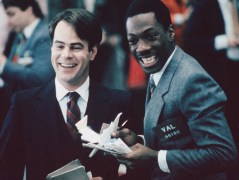 Link: http://www.npr.org/blogs/money/2013/07/09/200401407/episode-471-the-eddie-murphy-rule
Summary: The Planet Money team consider the movie Trading Places and it’s scheme to make millions short-selling commodity futures (specifically frozen orange juice concentrate). Includes explanations of commodity futures trading, short-selling, and regulation of futures trading.
Length: 26:05 min
Original air date: July 9, 2013
 Link: http://www.npr.org/blogs/money/2013/07/02/198077962/episode-470-killing-fannie-mae
Summary: The Planet Money team revisits the question what the U.S. government should do with the mortgage ‘backers’, Fannie Mae and Freddie Mac, which it took over as part of the financial crisis bailout. Includes a discussion of opposing views on whether the government should be involved in the housing market, and an outlook on what is politically most likely to be the long term outcome for these entities.
Length: 25:20 min
Original air date: July 2, 2013
 Link: http://www.npr.org/blogs/money/2013/07/12/201502003/episode-472-the-one-page-plan-to-fix-global-warming
Summary: Economist, Henry Jacoby, explains how an economist might introduce a carbon tax in the United States to address climate change. Includes a discussion of the conflicts of economics vs. politics.
Length: 19:51 min
Original air date: July 12, 2013
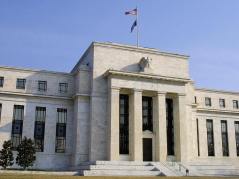 Link: http://www.npr.org/blogs/money/2013/07/17/203032386/the-ask-your-uncle-approach-to-economics
Summary: An exploration of one issue of the Federal Reserve’s Beige Book by focusing on some of the featured stories in the issue.
Length: 3:51 min
Original air date: July 17, 2013
 Link: http://www.npr.org/blogs/money/2013/07/16/202660132/episode-473-top-of-the-charts-econ-remix
Summary: A consideration of changes in the music industry, including different strategies that artists and record companies are using to try to maximize their profits. Ends with a discussion of the importance of efficient use of resources in this market.
Length: 21:51 min
Original air date: July 16, 2013
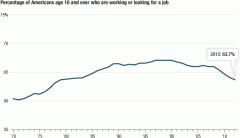 Link: http://www.npr.org/blogs/money/2013/08/02/208078183/four-reasons-why-millions-of-americans-are-leaving-the-workforce
Summary: An exploration of both the reasons that workers are leaving the workforce and how the U.S. Labor Department includes such workers (or not) in the unemployment rate.
Length: 4:16 min
Original air date: August 2, 2013
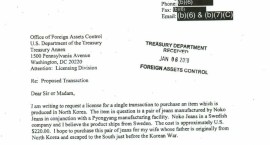 Link: http://www.npr.org/blogs/money/2013/07/23/204851751/episode-474-the-north-korea-files
Summary: Report on an investigation into U.S. citizens who seek to engage in trade with North Korea. Examples include companies seeking to trade for profit and to market new goods, individuals wanting kitsch goods, and religious organizations seeking a point of entry to the country. Includes discussions on sanctions and the political considerations of each government as they consider these appeals to engage in trade.
Length: 23:21 min
Original air date: July 23, 2013
Discussion Prompt (1): This podcast discusses a situation in which trade is (largely) prohibited. What are some of the reasons for people or nations engaging in trade that are discussed in the podcast?
Follow-up Prompt (1): Can anyone suggest additional reasons that trade might take place (in addition to those discussed in the podcast)? Think more generally about nations engaging in trade beyond the particular case of N. Korea and the rarity of those goods.
Discussion Prompt (2): Recognizing that N. Korea is an extreme example, what do you see as the pluses and minuses of a country having a more centrally planned or command type economic structure? Be sure to make comparisons to other types of economic systems.
Follow-up Prompt (2): Thinking about the role of government in a centrally planned economy, how do you think the role of incentives is different in a centrally planned economy than in a market economy? Give specific examples.
 Link: http://www.npr.org/blogs/money/2013/08/06/209598383/episode-477-waiting-for-robot-nannies
Summary: A discussion of the cultural obstacles to women in Japan working full time. Includes consideration of the following: impact on the Japanese economy overall, impact on demographics, related issues in the childcare industry, including impediments in the form of unintended consequences of government regulations .
Length: 14:22 min
Original air date: August 6, 2013

Link: http://www.npr.org/blogs/money/2013/07/09/199048226/how-to-spend-442-on-a-15-minute-cab-ride
Summary: New York City is implementing new regulations on pricing in the pedi-cab market. Includes interview of pedi-cab drivers who are for and against this new regulation, as well as some of the challenges of regulating the industry.
Length: 3:51 min
Original air date: July 5, 2013
 audioecon