Archive for the ‘Trade’ Category

Link: http://www.npr.org/blogs/money/2015/02/04/383830776/episode-601-the-chocolate-curse
Summary: This podcast explores the shortage in supply of cocoa around the world, as well as one man’s solution to the crisis. However, this solution comes at a price.
Original Air Date: February 5, 2015
Length: 18 minutes 12 seconds
 Link: http://www.npr.org/blogs/money/2015/02/13/386005044/episode-603-a-rose-on-any-other-day
The Planet Money Team investigates the logistics and risks that accompany the iconic Valentine’s Day flower, the rose. Additionally mentioned is cost of shipping and seasonal demand.
Original Air Date: February 13, 2015
Length: 17 minutes 37 seconds
 Link: http://www.marketplace.org/topics/business/made-italy-may-not-mean-what-you-think
Summary: The Country of Origin label is a powerful element on upscale brands. Italians consider it a national economic resource, but the stamp can’t always be believed. US laws say the “last substantial transformation” must be in the country of origin, and tracking manufacturing is difficult at best.
Original Air Date: September 24, 2014
Length: 3 minutes 55 seconds
 Link: http://www.marketplace.org/topics/sustainability/boom-and-bust-story-crop-called-guar
Summary: Guar is a small bean, and it had a recent rise and fall in the marketplace. Besides being an additive to thicken many foods, it’s also used in fracking. When fracking took off, the price of guar rose. As the price increased, Texas farmers started growing a lot of it, until Pakistan and India–which grow 98% of the guar combined–caught up to the demand. As a result, oil companies stopped hoarding it, and the prices dropped. The Texas farmers were left without buyers, and caused a chain reaction of bankruptcy.
Original Air Date: October 9, 2014
Length: 2 minutes 47 seconds
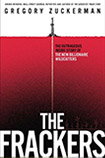 Link: http://www.econtalk.org/archives/2014/06/gregory_zuckerm.html
Summary: Russ Roberts, host of Econtalk, interviews Gregory Zuckerman, author of The Frackers: The Outrageous Inside Story of the New Billionaire Wildcatters about the rise of the hydraulic fracturing, its developmental stages and the eventual energy revolution.
Original Air Date: June 26, 2014
Length: 61 min
 Link: http://www.npr.org/blogs/money/2013/06/21/194326482/episode-467-tires-taxes-and-the-grizz
Summary: The prices of tires have been rising over the past five years primarily due to a rise in the price of inputs such as rubber. A tariff imposed by the U.S. government on Chinese tire imports has also contributed to the increase of tire prices. Planet Money outlines the negative impacts on U.S. tire companies resulting from the tariff.
Original Air Date: June 21, 2013
Length: 14 min
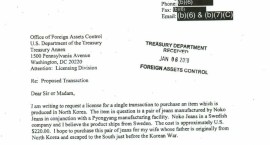 Link: http://www.npr.org/blogs/money/2013/07/23/204851751/episode-474-the-north-korea-files
Summary: Report on an investigation into U.S. citizens who seek to engage in trade with North Korea. Examples include companies seeking to trade for profit and to market new goods, individuals wanting kitsch goods, and religious organizations seeking a point of entry to the country. Includes discussions on sanctions and the political considerations of each government as they consider these appeals to engage in trade.
Length: 23:21 min
Original air date: July 23, 2013
Discussion Prompt (1): This podcast discusses a situation in which trade is (largely) prohibited. What are some of the reasons for people or nations engaging in trade that are discussed in the podcast?
Follow-up Prompt (1): Can anyone suggest additional reasons that trade might take place (in addition to those discussed in the podcast)? Think more generally about nations engaging in trade beyond the particular case of N. Korea and the rarity of those goods.
Discussion Prompt (2): Recognizing that N. Korea is an extreme example, what do you see as the pluses and minuses of a country having a more centrally planned or command type economic structure? Be sure to make comparisons to other types of economic systems.
Follow-up Prompt (2): Thinking about the role of government in a centrally planned economy, how do you think the role of incentives is different in a centrally planned economy than in a market economy? Give specific examples.
 Link: http://www.npr.org/blogs/money/2013/06/25/195641030/episode-468-kid-rock-vs-the-scalpers
Summary:The Planet Money team interview Kid Rock on his strategies to combat after-market sales of concert tickets by scalpers. Includes a discussion of changes in the concert industry, firm strategies to price differentiate and consumer views on such strategies.
Length: 19:05 min
Original air date: June 27, 2013
 Link: http://www.npr.org/blogs/money/2013/01/18/169719749/episode-431-a-billion-dollar-bet-against-weight-loss-shakes
Summary: Planet Money considers the debate in the investment world over whether the company Herbalife is a pyramid scheme. Also features a discussion on the ethics of short-selling.
Original air date: January 18, 2013
Length: 17:00
 Link: http://www.npr.org/blogs/money/2012/12/21/167802325/episode-425-an-fbi-hostage-negotiator-buys-a-car
Summary: A discussion of strategic negotiating techniques in the context of the fiscal cliff debate.
Original air date: January 4, 2013
Length: 18:04
 audioecon