Archive for the ‘Financial Crisis’ Category
 Link: http://www.npr.org/sections/money/2015/10/23/451228005/episode-659-how-to-make-3-trillion-disappear
Summary: The Planet Money team discusses the end of quantitative easing – how it works and how it is coming to an end. A particular focus is how this process will impact commercial banks and their clients.
Original Air Date: October 26, 2015
Length: 15 minutes 25 seconds
 Link: http://www.npr.org/sections/money/2015/06/19/415804477/episode-634-worst-case-scenario
Summary: The Planet Money team investigate current problems in our economy that could create the next economic crisis.
Original Air Date: July 19, 2015
Length: 16 mins
 Link: http://www.npr.org/sections/money/2015/07/08/421228146/episode-637-the-last-euro-in-greece
Summary: The Planet Money team discusses the role the banks played in the Greek debt crisis and how it affected the Greek people.
Original Air Date: July 8, 2015
Length: 13 minutes 38 seconds
 Link: http://www.npr.org/blogs/money/2014/10/03/353300404/episode-573-why-textbook-prices-keep-climbing
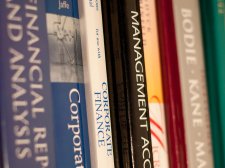
Summary: Something strange is going on in the textbook market. The price has steeply increased over the past decade–and they’re only getting higher. There is a disconnect between the chooser (the professors) and the buyers (the students). Technically, the professor is the consumer, and they’re spending their students’ money. The podcast offers the opposite: high school textbooks, where costs are kept low because the books are paid for by the schools.
Original Air Date: October 3, 2014
Length: 14 minutes 56 seconds
Discussion Question/ Prompt: Propose a solution to the rising textbook price problem. (Example: a price ceiling? professor awareness of prices? incentives for lower prices?)
 Link: http://www.marketplace.org/topics/economy/interstate-tax-break-battle
Summary: The Obama Administration has been cracking down on inversions–where companies avoid US taxes by getting a foreign address. Now, it is being taken down to a state level, as states hand out tax breaks to try to increase business and get out of the Great Recession.
Original Air Date: September 24, 2014
Length: 2 minutes 27 seconds
 Link: http://www.marketplace.org/topics/wealth-poverty/how-tough-economy-changes-young-peoples-lives
Summary: Many people are still feeling the after-effects of the Great Recession, especially young adults. Young adults still have a higher than average unemployment rate, and are not hitting traditional milestones–such as living alone, starting careers, buying their first home–and have been described as a generation that has “failed to launch” due to the poor economy. Everything that is happening to this generation is happening later in life as they work to launch themselves as independent, self-supporting adults in the harsh economic environment.
Original Air Date: September 16, 2014
Length: 4 minutes 36 seconds
 Link: http://www.marketplace.org/topics/economy/americans-appear-ready-go-shopping-again
Summary: Consumer reports conclude Americans are ready to spend again. The market is on the rise, especially as the recession fades.
Original Air Date: September 25, 2014
Length: 1 minute 28 seconds
 Link: http://www.marketplace.org/topics/economy/new-financial-innovation-housing-market
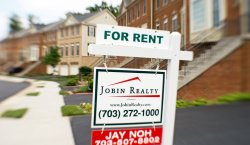
Summary: Large investors have started buying houses–in the past few years, they have bought almost 200,000 new homes. The strategy was to buy low, and set the rent high. Interestingly enough, housing prices have appreciated, and rental prices have stayed the same, which results in not as big of a profit for the investors. This has created what they call rental-backed securities.
Original Air Date: October 13, 2014
Length: 2 minutes 52 seconds
 Links: http://www.npr.org/blogs/money/2014/05/30/317030992/episode-543-a-world-without-banks
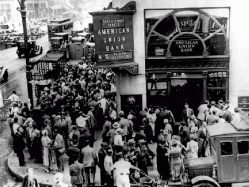
Summary: What would the world look like without its financial institutions? Without its banks? Thats the very thought that has been circulating since the Great Recession. The Planet Money team considers a world without banks.
Original Air Date: May 30, 2014
Length: 14 min
 Link: http://www.npr.org/blogs/money/2011/09/16/140464797/a-slow-motion-bank-run-in-europe
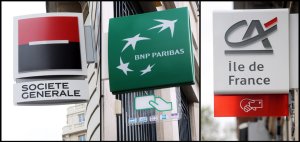
Summary: What are the potential risks and negative spillovers of “big banks” failing? This podcast outlines why big banks, for example big French banks cannot default because of the havoc that would befall in an economy.
Original Air Date: September 14, 2011
Length: 3 min
 audioecon