Archive for the ‘International trade’ Category
 Link: http://www.marketplace.org/2016/03/21/world/venezuela-hot-dog
Summary: Marketplace breaks down the complexities of the Venezuelan economy using the local pepito as a metaphor to explore inflation and the impacts of an oil-dependent economy.
Original Air Date: March 23, 2016
Length: 3 minutes 16 seconds
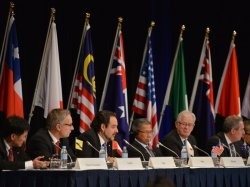 Link: http://www.npr.org/sections/money/2015/11/06/455055023/episode-662-omg-tpp
Summary: In this podcast, the Planet Money team investigates the much anticipated Trans-Pacific Partnership and discusses some of the highlights in the bill’s nearly six thousand pages.
Original Air Date: November 7, 2015
Length: 22 minutes 9 seconds
 Link: http://www.npr.org/sections/money/2015/07/08/421228146/episode-637-the-last-euro-in-greece
Summary: The Planet Money team discusses the role the banks played in the Greek debt crisis and how it affected the Greek people.
Original Air Date: July 8, 2015
Length: 13 minutes 38 seconds
 Link: http://www.npr.org/blogs/money/2014/10/29/359624435/episode-578-how-to-steal-a-million-barrels-of-oil
Summary: The Nigerian Internet hosts many ads for stolen oil, inspiring the question: how? Why? Nigeria has one of the top oil reserves, and it is controlled by the government. They lose about $10 million a day from oil theft. This podcast dissects how they get away with it.
Original Air Date: October 29, 2014
Length: 19 minutes 30 seconds
Discussion Question: The podcasts says that this problem is for the Nigerian government to solve. Should it be an international issue?
Prompt: The podcast does not reflect on the legally sold oil, and the effect the stolen oil has on that market. Write how you think the stolen oil would change the market for legal crude oil in the international arena, paying specific attention to the quantity and the prices.

Link: http://www.marketplace.org/topics/business/why-ibm-paying-15-billion-lose-business
Summary: IBM has fell 7 percent off its stock price this week. IBM is selling its chip making company to GlobalFoundries for $1.5 billion over the next three years. It would sound unconventional, except when looking to the future. IBM will be receiving chips for the next ten years from GlobalFoundries. Deals like this are exceedingly rare, but IBM has realized truth: it would be more costly to shut down than to sell, and they may be saving money in the end.
Original Air Date: October 20, 2014
Length: 2 minutes 22 seconds
Prompt / Discussion: Discuss how this type of deal differs from collusion.
 Link: http://www.npr.org/blogs/money/2015/04/10/398811199/episode-616-how-solar-got-cheap
Summary: Solar power is becoming increasingly popular. The main reason is not due to environmental awareness but because of a market glut and a need to clear inventory.
Original Air Date: April 10, 2015
Length: 16 minutes

Link: http://www.npr.org/blogs/money/2013/12/06/247361423/the-giant-book-that-creates-and-destroys-entire-industries
Summary: In this podcast tariffs are examined, showing both their positive and negative affects on economies. Also mentioned is the Harmonized Tariff Schedule which gages how much each import is to be taxed
Original Air Date: December 12, 2013
Length: 5 minutes 20 seconds

Link: http://www.npr.org/blogs/money/2015/02/04/383830776/episode-601-the-chocolate-curse
Summary: This podcast explores the shortage in supply of cocoa around the world, as well as one man’s solution to the crisis. However, this solution comes at a price.
Original Air Date: February 5, 2015
Length: 18 minutes 12 seconds
 Link: http://www.npr.org/blogs/money/2015/02/13/386005044/episode-603-a-rose-on-any-other-day
The Planet Money Team investigates the logistics and risks that accompany the iconic Valentine’s Day flower, the rose. Additionally mentioned is cost of shipping and seasonal demand.
Original Air Date: February 13, 2015
Length: 17 minutes 37 seconds
 Link: http://www.marketplace.org/topics/business/made-italy-may-not-mean-what-you-think
Summary: The Country of Origin label is a powerful element on upscale brands. Italians consider it a national economic resource, but the stamp can’t always be believed. US laws say the “last substantial transformation” must be in the country of origin, and tracking manufacturing is difficult at best.
Original Air Date: September 24, 2014
Length: 3 minutes 55 seconds
 audioecon