Archive for the ‘Efficiency’ Category
 Link: http://www.npr.org/sections/money/2016/02/17/467108611/episode-684-the-return-of-the-colonel
Summary: Colonel Sanders passed away years ago, which began the strained relationship between KFC Corporate and the KFC Franchises. After a disastrous Oprah segment leading to a free giveaway, the relationship hit rock bottom. Planet Money discusses how re-introducing Colonel Sanders (the character), led to happier franchises and more sales for corporate.
Original Air Date: February 17, 2016
Length: 15 minutes 2 seconds
 Link: http://www.npr.org/sections/alltechconsidered/2014/06/10/320347267/project-eavesdrop-an-experiment-at-monitoring-my-home-office
Summary: New technology has been a great benefit to the global economy, but privacy could be at an all-time low. Planet Money discusses the NSA and Edward Snowden in part 1 and investigates how secure you really are, and whether this is a problem for technology companies in part 2.
Original Air Date: June 10, 2014
Length: Part 1: 7 minutes 47 seconds Part 2: 7 minutes 47 seconds
 Link: http://www.npr.org/sections/money/2016/09/21/494927147/episode-555-why-is-the-milk-in-the-back-of-the-store
Summary: There has been a debate for decades as to why the milk is in the back of a store. Consumers say it’s because you have to walk through store, producers say it’s because of ease of access for the delivery trucks. Planet Money researches what the actual answer is by talking to people in the industry.
Original Air Date: July 23,2014
Length: 16 minutes 9 seconds
 Link: http://www.npr.org/sections/money/2015/11/04/454698093/episode-661-the-less-deadly-catch
Summary: The Planet Money team investigates a regulation the Alaskan government implemented to make fishing less frantic and more efficient.
Original Air Date: November 4, 2015
Length: 18 minutes 11 seconds
 Link: http://www.npr.org/blogs/money/2014/10/29/359624435/episode-578-how-to-steal-a-million-barrels-of-oil
Summary: The Nigerian Internet hosts many ads for stolen oil, inspiring the question: how? Why? Nigeria has one of the top oil reserves, and it is controlled by the government. They lose about $10 million a day from oil theft. This podcast dissects how they get away with it.
Original Air Date: October 29, 2014
Length: 19 minutes 30 seconds
Discussion Question: The podcasts says that this problem is for the Nigerian government to solve. Should it be an international issue?
Prompt: The podcast does not reflect on the legally sold oil, and the effect the stolen oil has on that market. Write how you think the stolen oil would change the market for legal crude oil in the international arena, paying specific attention to the quantity and the prices.

Link: http://www.marketplace.org/topics/business/why-ibm-paying-15-billion-lose-business
Summary: IBM has fell 7 percent off its stock price this week. IBM is selling its chip making company to GlobalFoundries for $1.5 billion over the next three years. It would sound unconventional, except when looking to the future. IBM will be receiving chips for the next ten years from GlobalFoundries. Deals like this are exceedingly rare, but IBM has realized truth: it would be more costly to shut down than to sell, and they may be saving money in the end.
Original Air Date: October 20, 2014
Length: 2 minutes 22 seconds
Prompt / Discussion: Discuss how this type of deal differs from collusion.
 Link: http://freakonomics.com/2014/10/02/fixing-the-world-bang-for-the-buck-edition-a-new-freakonomics-radio-podcast/
Summary: Return on Investment (ROI) analyzes at the most efficient way to spend money. An example given is the difference between curing malaria and HIV/AIDS. To cure malaria, it would cost about $1,000 per person, while it would cost ten times that to cure HIV/AIDS, and it is decided that they would rather save 10 people from malaria before they save one from HIV/AIDS. The United Nations, with their Millennium Development Goals coming to a close, will be looking to set new goals in 2015, to be completed by 2030. One of the issued they will focus on is how they are setting goals, and how to be more efficient with the help of the Return on Investment analysis.
Original Air Date: October 2, 2014
Length: 43 minutes 34 seconds
Prompt / Discussion: You are a member of the United Nations, and are put in charge of coming up with new development goals for 2015. You have $100 billion to invest in various development aid. Discuss how you would prioritize between an important, expensive goal (such as getting all kids into school, which was one of the Millennium Development Goals), and something that might not be seen as highly important, but cost effective.

Link: http://www.npr.org/blogs/money/2013/09/25/223787129/what-happens-when-a-store-lets-customers-return-whatever-they-want
Summary: This podcast examines the pros and cons to a lenient return policies for businesses and the affect it has on their brand. Some companies see it as a loss of business while others view it as cheap marketing.
Original Air Date: September 25, 2013
Length: 4 minutes 23 seconds
 Link: http://www.marketplace.org/topics/economy/special-shopping-day-overload
Summary: The number of shoppers on Black Friday was down this year (2014). Because of the ease in comparing prices online to find the best deal, Black Friday (and the whole weekend) has become a ritual team effort of mothers, daughters, and other relatives.
Original Air Date: December 1, 2014
Length: 1 minute 47 seconds
Discussion Question: Is the economy effecting how many people shop on the Black Friday weekend? Or is it something else that’s driving the number of shoppers down?
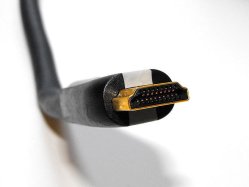 Link: http://www.npr.org/blogs/money/2014/11/28/366793693/episode-586-how-stuff-gets-cheaper
Summary: The Planet Money team looks at how some things get cheaper over time. The podcast hosts visit a company called Monoprice, whose job it is to find out ways to make things cheaper–in other words, a lot of detective work.
Original Air Date: November 28, 2014
Length: 14 minutes 11 seconds
Prompt: Write a brief letter to Monoprice with your thoughts on their job. Is it efficient? Is it cost-productive?
 audioecon