Author Archive
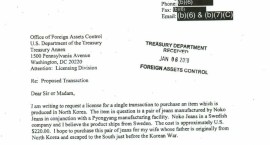 Link: http://www.npr.org/blogs/money/2013/07/23/204851751/episode-474-the-north-korea-files
Summary: Report on an investigation into U.S. citizens who seek to engage in trade with North Korea. Examples include companies seeking to trade for profit and to market new goods, individuals wanting kitsch goods, and religious organizations seeking a point of entry to the country. Includes discussions on sanctions and the political considerations of each government as they consider these appeals to engage in trade.
Length: 23:21 min
Original air date: July 23, 2013
Discussion Prompt (1): This podcast discusses a situation in which trade is (largely) prohibited. What are some of the reasons for people or nations engaging in trade that are discussed in the podcast?
Follow-up Prompt (1): Can anyone suggest additional reasons that trade might take place (in addition to those discussed in the podcast)? Think more generally about nations engaging in trade beyond the particular case of N. Korea and the rarity of those goods.
Discussion Prompt (2): Recognizing that N. Korea is an extreme example, what do you see as the pluses and minuses of a country having a more centrally planned or command type economic structure? Be sure to make comparisons to other types of economic systems.
Follow-up Prompt (2): Thinking about the role of government in a centrally planned economy, how do you think the role of incentives is different in a centrally planned economy than in a market economy? Give specific examples.
 Link: http://www.npr.org/blogs/money/2013/08/06/209598383/episode-477-waiting-for-robot-nannies
Summary: A discussion of the cultural obstacles to women in Japan working full time. Includes consideration of the following: impact on the Japanese economy overall, impact on demographics, related issues in the childcare industry, including impediments in the form of unintended consequences of government regulations .
Length: 14:22 min
Original air date: August 6, 2013

Link: http://www.npr.org/blogs/money/2013/07/09/199048226/how-to-spend-442-on-a-15-minute-cab-ride
Summary: New York City is implementing new regulations on pricing in the pedi-cab market. Includes interview of pedi-cab drivers who are for and against this new regulation, as well as some of the challenges of regulating the industry.
Length: 3:51 min
Original air date: July 5, 2013
 Link: http://www.npr.org/blogs/money/2013/08/09/210550830/episode-478-rocky-pipkin-private-eye-vs-the-raisin-outlaw
Summary: Describes the raisin industry in the United States and how historic events resulted in a government sanctioned raisin cartel. Includes discussion of one producer breaking from the cartel, efforts by the cartel to enforce its collective actions, and other political and economic impacts of this defection.
Length: 21:51 min
Original air date: August 9, 2013
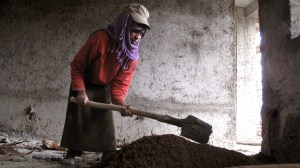 Link: http://www.wbur.org/npr/207858449/for-ethiopian-women-construction-jobs-offer-a-better-life
Summary: Discusses the impacts on women and on various markets in Ethiopia as women enter the construction industry. Example of gender pay gap.
Length: 7:49 min
Original air date: August 7, 2013
 Link: http://www.npr.org/blogs/money/2013/06/25/195641030/episode-468-kid-rock-vs-the-scalpers
Summary:The Planet Money team interview Kid Rock on his strategies to combat after-market sales of concert tickets by scalpers. Includes a discussion of changes in the concert industry, firm strategies to price differentiate and consumer views on such strategies.
Length: 19:05 min
Original air date: June 27, 2013
 Link: http://www.npr.org/blogs/money/2013/06/11/190746413/episode-465-myanmar-opens-up
Summary: In the context of its t-shirt project (see tags) Planet Money considers whether or not producing t-shirts in Bangladesh is helpful to the country’s economy and people. This debate follows the tragedies in the garment industry in Bangladesh in 2012-2013. Features an interview with a woman who was worker in a garment factory in Bangladesh in the late 90s, and is now a labor activist, and a discussion of the role of garment manufacturing in the economic development of many countries.
Length: 16:48
Original air date: May 14, 2013
 Link: http://www.npr.org/blogs/money/2013/06/11/190746413/episode-465-myanmar-opens-up
Summary: Planet Money explores the challenges of businesses entering a newly open economy. An entrepreneur faces first-mover challenges common to developing countries, including lacking financial and telecommunications infrastructure. An executive from Coca-Cola revisits the company’s history as the company introduces Coke to a new audience and challenges its reputation as a luxury good.
Length: 18:39
Original air date June 11, 2013
 Link: http://www.npr.org/blogs/money/2013/04/26/179295426/episode-454-the-lollipop-war
Summary: Planet money explores the struggle between two iconic American industries—the lollipop makers and the sugar growers— over “fair” regulations set forth by Congress in the farm bill.
Length: 19:19 min
Original air date: April 26, 2013
Discussion Prompt: What are the economic impacts of the subsidy on sugar for: farmers, candy producers, U.S. citizens, U.S. consumers? Why do you think sugar subsidies persist, and why do you think this fight about sugar has been ongoing in the U.S. government for so many years?
 Link: http://www.npr.org/blogs/money/2013/05/24/186477854/episode-217-the-art-of-living-at-the-poverty-line
Summary: Discusses an immigrant woman’s ability to live below the poverty line while also utilizing all the resources available to her to provide the best life to her young son. Discusses whether transfer payments are good or bad investments.
Length: 22:17 min
Original air date: May 24, 2013
 audioecon