Archive for the ‘NPR’ Tag
 Link: http://www.npr.org/sections/money/2015/10/09/447249562/episode-656-bubblelicious
Summary: In this podcast the Planet Money team investigates the possibility of a bubble in the technology industry in San Francisco. Billions of dollars are being acquired by these tech companies and their over confidence might be an indicator to a future bubble.
Original Air Date: October 9, 2015
Length: 14 mins
 Link: http://www.npr.org/2015/07/02/419405924/justice-department-investigates-airlines-for-possible-price-collusion
Summary: The Justice Department is planning to investigate 4 major airlines for price collusion. Investigators will question whether the airlines restricted supply to maintain higher ticket prices.
Original Air Date: July 2, 2015
Length: 3 minutes 35 seconds
 Link: http://www.npr.org/sections/money/2015/07/08/421228146/episode-637-the-last-euro-in-greece
Summary: The Planet Money team discusses the role the banks played in the Greek debt crisis and how it affected the Greek people.
Original Air Date: July 8, 2015
Length: 13 minutes 38 seconds
 Link: http://www.npr.org/sections/money/2015/09/25/443519599/episode-653-the-anti-store
Summary: In this podcast the planet money team dissects the bulk grocery industry of places such as Price Club, Costco, and Jet to see how much the consumer is really saving and how the businesses make a profit from that.
Original Air date: September 23, 2015
Length: 15 minutes and 9 seconds
 Link: http://www.npr.org/blogs/money/2014/10/03/353300404/episode-573-why-textbook-prices-keep-climbing
Summary: Something strange is going on in the textbook market. The price has steeply increased over the past decade–and they’re only getting higher. There is a disconnect between the chooser (the professors) and the buyers (the students). Technically, the professor is the consumer, and they’re spending their students’ money. The podcast offers the opposite: high school textbooks, where costs are kept low because the books are paid for by the schools.
Original Air Date: October 3, 2014
Length: 14 minutes 56 seconds
Discussion Question/ Prompt: Propose a solution to the rising textbook price problem. (Example: a price ceiling? professor awareness of prices? incentives for lower prices?)
 Link: http://www.npr.org/blogs/money/2014/10/17/356944145/episode-576-when-women-stopped-coding
Summary: How did women go from being the pioneers of the coding industry to… the sidelines? The answer directly relates to the number of women studying computer science, and what happened in 1984 to change everything. A factor, as it turns out, is the marketing ploys aimed at women.
Original Air Date: October 17, 2014
Length: 17 minutes 12 seconds
 Link: http://www.npr.org/blogs/money/2014/10/29/359624435/episode-578-how-to-steal-a-million-barrels-of-oil
Summary: The Nigerian Internet hosts many ads for stolen oil, inspiring the question: how? Why? Nigeria has one of the top oil reserves, and it is controlled by the government. They lose about $10 million a day from oil theft. This podcast dissects how they get away with it.
Original Air Date: October 29, 2014
Length: 19 minutes 30 seconds
Discussion Question: The podcasts says that this problem is for the Nigerian government to solve. Should it be an international issue?
Prompt: The podcast does not reflect on the legally sold oil, and the effect the stolen oil has on that market. Write how you think the stolen oil would change the market for legal crude oil in the international arena, paying specific attention to the quantity and the prices.
 Link: http://www.npr.org/blogs/money/2014/08/14/340356790/should-we-kill-the-100-bill
Summary: The Planet Money team investigates the $100 bill and found that over two-thirds of the bills are overseas. Additionally, they assume the bills are used for illegal activities due to their convenience.
Original Air Date: August 14, 2014
Length: 6 minutes 10 seconds
 Link: http://www.npr.org/blogs/money/2015/04/10/398811199/episode-616-how-solar-got-cheap
Summary: Solar power is becoming increasingly popular. The main reason is not due to environmental awareness but because of a market glut and a need to clear inventory.
Original Air Date: April 10, 2015
Length: 16 minutes
 Link: http://www.npr.org/blogs/money/2014/11/28/366793693/episode-586-how-stuff-gets-cheaper
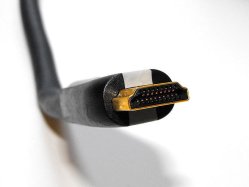
Summary: The Planet Money team looks at how some things get cheaper over time. The podcast hosts visit a company called Monoprice, whose job it is to find out ways to make things cheaper–in other words, a lot of detective work.
Original Air Date: November 28, 2014
Length: 14 minutes 11 seconds
Prompt: Write a brief letter to Monoprice with your thoughts on their job. Is it efficient? Is it cost-productive?

 audioecon