This podcast uses behavioral economics to analyze the reasons why people may refuse to wear masks. Economists believe when these individuals feel external constraints on their freedoms, they feel even less inclined to wear a mask. Behavioral economists discuss nudges/incentives that could be effective in this situation.
Original Air Date: August 7, 2020
Length: 26 minutes 26 seconds
Discussion Prompt: What are some other incentives you can think of that would influence more widespread mask wearing?
There is increasing demand for a Covid-19 vaccine, and although many are developing, scientists are still unsure when an effective vaccine will be finished. There is also concern that low income countries will struggle to gain equitable access to the vaccine once it is produced. Thomas Cueni, the director general of the International Federation of Pharmaceutical Manufacturers and Associations emphasized the importance of high income countries buying into efforts which would subsidize lower income countries.
Oil prices have officially fallen well below a dollar in the United States. This is extremely telling about the current state of the economy, considering this has never happened before.
Original Air Date: April 22 2020
Length: 16 minutes 22 seconds
Discussion Prompt: What can this tell us about the state of the global economy at the time of negative oil? If you were advising policy makers, how important would you say this event was or was not? Why?
Economists discuss the valuation of human life model to determine when the appropriate time to open the economy is. Federal agencies typically value a human life at $10 million. Many economists recently have said that right now, it is not worth it to open the economy back up.
Since the beginning of the pandemic, the agriculture supply chain has been suffering. Although the shelves at grocery stores are not fully stocked, farmers are giving away their goods, or even turning it into fertilizer.
Original Air Date: April 23 2020
Length: 9 minutes 25 seconds
Discussion Prompt: How will this affect the agriculture industry? What does this tell us about how these markets are functioning? What solutions can you propose which would help the industry financially?
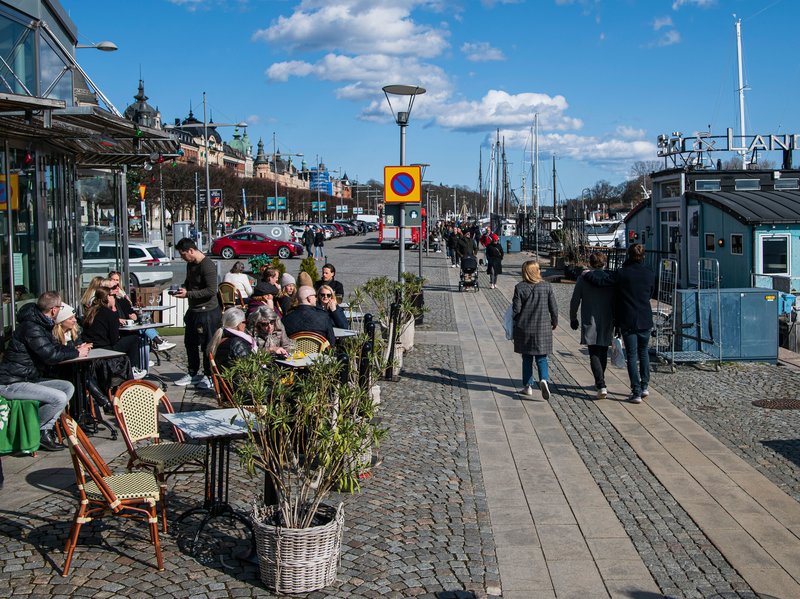
The majority of countries across the globe are enforcing mandatory lockdowns, but not Sweden. All businesses are remaining open, including schools, night clubs and gyms. Sweden’s head epidemiologist states that this approach is more sustainable and less disruptive to peoples’ lives.
Original Air Date: April 9, 2020
Length: 9 minutes 57 seconds
Discussion Prompt: Do you agree or disagree with Sweden’s approach to this pandemic? Why or why not?
Note: Sweden’s chief epidemiologist has since admitted this policy resulted in “too many deaths“
Delivery and service workers are considered essential right now. Without them, the economy would likely be in even more trouble than it already is. That being said, they are paid a very low wage, and some are not even being provided with adequate protection such as masks and gloves.
Original Air Date: April 7, 2020
Length: 9 minutes 56 seconds
Discussion Prompt: With the current increased demand for Instacart and other grocery delivery services, do you think demand will stay high after the pandemic? Use economic thinking to analyze what you think is happening in the market now. How do you think will this market change once the pandemic ends?
Many economists believe the stimulus provided in the CARES Act may end up not being enough to combat the current economic downturn. Economists are suggesting three things: using automatic triggers, such as a rise in the unemployment rate, to trigger future payments by the government; allowing individuals to receive their money through mobile apps such as Venmo; and allowing small businesses to refinance existing debt.
Original Air Date: April 1, 2020
Length: 9 minutes 20 seconds
Written Assignment Prompt: Discuss the pros and cons of the ideas discussed in this podcast. Which, if any, do you think will have the best impact on the economy? What ideas can you come up with that may help combat the effects of this recession?
This podcast discusses how part of the economic solution could actually save lives by providing assistance to the healthcare system. Large scale randomized testing may be critical in order to acquire more accurate data on the spread of the virus. In addition, they discuss the importance of complete transparency with government agents.
Original Air Date: April 1, 2020
Length: 47 minutes 9 seconds
Discussion Prompt: What is the idea at the root of this framing of the question as a tradeoff between saving the economy versus saving lives? After listening to this podcast, is it possible to save the economy and combat the pandemic? Do you think there is indeed a tradeoff? Why or why not?
Discussion Prompt: Do you think how the U.S. is handling the pandemic will spark change in the healthcare system?
In the wake of the Covid-19 crisis, the healthcare industry is experiencing a shortage of ventilators. Without increased production, hundreds of thousands of individuals will die. Now, companies that have little to no experience producing ventilators are beginning to help supply them.
Original Air Date: March 31, 2020
Length: 24 minutes 3 seconds
Discussion Prompt: In what ways does this policy align with economic thinking? In what ways is it ‘out of step’ with economic thinking? Is this the most efficient way to produce ventilators, at least for the time being? How can the government incentivize companies to stay open and help produce parts for ventilators during this time?







 audioecon