 Link: http://www.npr.org/blogs/money/2012/04/17/150815268/why-people-do-bad-things
Summary: Discussion of the role of cognitive errors in decision making through consideration of the story of an everyman businessman who engaged in million dollar bank fraud.
Original Air Date: April 17, 2012
Length: 25:57
Main story content begins: 3:34
 Link: http://www.npr.org/blogs/money/2012/04/10/150368897/the-matzo-economy
Summary: A visit to the Manischewitz matzo factory as an illustration of niche industries. An illustration of the impact of regulations via religious restrictions.
Original Air Date: April 10, 2012
Length 21:19
Main story content begins: 2:24
Discussion Prompt: This podcast features the many rules, restrictions and regulations faced by the Manischewitz company. (1) How do you think these restrictions relate to concepts about different market structures that firms may operate in? (2) What do you see as the benefit to the Manischewitz company that comes from operating in this unique marketplace? What are the challenges? What benefits / challenges might face a new company seeking to join this industry?
Follow-up Prompt: How might technology and/or the passage of time impact the degree to which these restrictions help or hurt the Manischewitz company? Do you think this might be different for other industries where barriers to entry are a component of the market structure?
This site is a curated library of economics-themed podcasts, primarily from Planet Money, but also from Freakonomics, EconTalk, This American Life and others. The site is designed for economics instructors with searchable categories created with the instructor in mind, as well as suggestions for podcast-related assignments they might incorporate into course instruction. Audioecon will also be of interest to anyone who enjoys learning more about economics. Audioecon and related assignments is featured in the Journal of Economics Education article Podcasts as a Tool for Teaching Economics Vol.45, Iss.3, 2014.
I hope you find this site useful and interesting, and welcome your feedback!
I wish you smart listening!
 Summary: A history of taxicabs in New York sheds light on why a single taxi medallion, which serves as a permit to operate a cab in the city, would be sold for $1 million.
Link: http://www.npr.org/blogs/money/2011/11/29/142866785/the-tuesday-podcast-why-does-a-taxi-medallion-cost-1-million
Original Air Date: November 29, 2011
Length 19:40
Main story content begins: 0:00 (Planet Money indicator discusses the price of a taxi medallion itself).

Link: http://www.npr.org/blogs/money/2012/05/11/152511771/the-real-price-of-college
Summary: Discussion of strategies that colleges employ to compete for students, including scholarships.
Length 13:35
Main story content begins: 0:00 (no indicator)
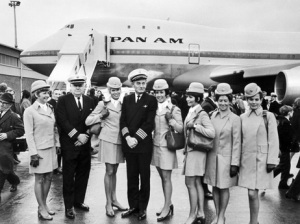
Link: http://www.npr.org/blogs/money/2011/12/09/143466204/the-friday-podcast-the-nasty-rotten-airline-business
Summary: In the context of the 2011 bankruptcy declaration by American Airlines, a discussion of the factors driving bankruptcies in the airline industry.
Original Air Date: December 9, 2011
Length 16:56
Main story content begins: 3:24
 Link: http://www.npr.org/blogs/money/2012/02/14/146889446/the-tuesday-podcast-lighthouses-autopsies-and-the-federal-budget
Summary: Discussion with Charlie Wheelan, author of Naked Economics, of the role of government in provision of public goods and the definition of public goods.
Original Air Date: February 14, 2012
Length 21:49
Main story content begins: 2:16

Link: http://www.npr.org/blogs/money/2010/01/podcast_an_economist_gets_ston.html
Summary: Interview with economist Jeffrey Miron of the market for illegal drugs and the economic impact of ‘legalizing’ marijuana through implementation of medical marijuana laws at the state level.
Original Air Date: January 27, 2010
Length 19:03
Main story content begins: 0:00 (Planet Money indicator discusses contribution of marijuana to California economy)
Class Discussion Question: Discuss the conclusions reached in the podcast about the interaction of the elasticity of drugs and drug legalization. What impact do you think this would have on, for example, the marijuana industry when states legalize this product?
Written Assignment Prompt: Marijuana is California’s largest cash crop, with about 1,000 stores selling pot in LA alone. Predict the supply and demand of marijuana for Los Angeles that would come with the legalization of the drug.
 Link: http://www.npr.org/blogs/money/2010/10/08/130436221/the-friday-podcast-buttons-and-other-connectors
Summary: A profile of American manufacturing by visiting two U.S. factories, one struggling to compete in a global economy, and another thriving.
Original Air Date: October 8, 2010
Length 26:35
Main story content begins: 2:22
Discussion Prompt: Consider the two firms discussed in the podcast in the context of different types of market structures (ex. monopolistic competition, perfect competition, oligopoly, monopoly). What type of market structure do you think each firm is operating in? Explain why you think this using the characteristics of each market type and be sure to share your analysis.
Follow-up Prompt: Review your peer’s discussion posts. Try to come to a further developed and agreed upon idea of what type of market structure each firm might be operating. Here are some factors to consider: (1) number of firms – note that how we count the firms depends on how we’re defining the product/market. Note that many companies compete in a global market now, so location is not as important as the substitutability of the products of potential competitor firms. (2) type of product produced: note that in the oligopoly structure firms can be producing products that are identical to one another OR differentiated, that is not as important for oligopoly as is the fact that there are a few firms controlling the market; for monopolistic competition the products are differentiated, but relatively substitutable – so that they can be considered within one market; finally monopolists have a unique product with no close substitutes (substitutes that may exist are not close). (3) barriers to entry / ease of entry: one of the key things to consider here is the presence of patents, which serve as barriers to entry for a period of time. Note that in monopolistic competition there are low/no barriers to entry, with higher barriers in oligopoly and highest in monopoly. With patents we also have to think about whether they are making a product differentiated or making it completely unique.
 Link: http://www.npr.org/blogs/money/2010/06/04/127480338/the-friday-podcast-india-s-economy-is-booming-but-not-for-everybody
Summary: Considers questions about economic disparity in benefits from economic growth by talking with a cobbler who lives on the streets and economic policy makers in India.
Original air date: June 4, 2010
Length 23:56
Main story content begins: 2:27
 audioecon