Archive for the ‘Urban economics’ Category
 Link: http://www.marketplace.org/2016/03/16/business/eb5-visas
Summary: Marketplace analyzes the EB-5 visa program which allows wealthy foreign investors to secure American citizenship, only if investors are willing to invest at least a half a million dollars in the United States.
Original Air Date: April 18, 2016
Length: 2 minutes 29 seconds
 Link: http://www.marketplace.org/2016/03/18/world/why-theres-so-much-economic-anxiety-midlife
Summary: According to the Marketplace Economic Anxiety Index, 35-54 year olds are the most worried age group in the U.S. Children’s college tuition and retirement loom over these folks and they also felt the aftershocks of the housing crisis and stock market crash. Marketplace speaks to a couple about their economic concerns and decisions.
Original Air Date: March 18, 2016
Length: 5 minutes and 4 seconds
 Link: http://www.npr.org/blogs/money/2014/03/06/286861541/does-raising-the-minimum-wage-kill-jobs
Summary: Minimum wage is a hot topic in the economic realm. In this podcast the same study is done three times resulting in different outcomes on the pros and cons of raising the minimum wage.
Original Air Date: March 6, 2014
Length: 4 minutes 32 seconds
 Link: http://www.npr.org/blogs/money/2011/03/15/134432054/a-shrinking-city-knocks-down-neighborhoods
Summary: How do you shrink down a city? In the past decade, the people of Youngstown, Ohio have experienced an 18% decrease in their population. Realizing that conventional economic development and city planning are not bringing efficient production, Youngstown has decided that expansion is not part of their agenda.
Original Air Date: March 15, 2011
Length: 4 min
 Link: http://www.freakonomics.com/2013/03/13/parking-is-hell-a-new-freakonomics-radio-podcast/
Summary: Interview with Professor of Urban Planning, Donald Shoup, author of The High Cost of Free Parking about the hidden price of ‘free’ parking. Includes consideration of the use / abuse of handicapped placards and the percentage of urban land taken up by parking areas.
Length: 37:09
Original air date: March 13, 2013
 Link: http://www.freakonomics.com/2011/02/18/freakonomics-radio-why-cities-rock/
Summary: Edward Glaeser, professor of Economics at Harvad University and author of the book Triumph of the City: How Our Greatest Invention Makes Us Richer, Smarter, Greener, Healthier, and Happier explains the importance of urban cities and the positive effects they produce for our overall wellbeing.
Original Air Date: February 18, 2011
Length: 17 min
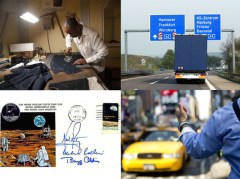 Link: http://www.npr.org/blogs/money/2012/09/11/160959685/episode-401-four-in-one
Summary: NPR visit Manhattan New York, Brooklyn New York, Germany and the moon in this four-story podcast to consider: the effect of taxis on the infrastructure of a city; the craftsmanship of a bespoke tailor; the complicated aspects of the employment sector in the European Union; and the clever life insurance strategies of the Apollo 11 crew before their launch to the moon.
Original air date: September 11, 2012
Length: 22:21 min
 Link: http://www.npr.org/blogs/money/2012/09/04/160555540/episode-279-the-failure-tour-of-new-york
Summary: Economist Tim Harford, senior columnist for the Financial Times, argues that failure is necessary for success and that economic growth is a product of learning from mistakes.
Original air date: September 04, 2012
Length: 14:22 min
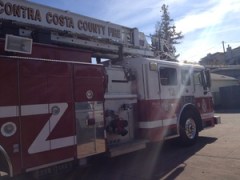 Link: http://www.npr.org/blogs/money/2012/12/18/167265874/episode-424-how-much-is-a-firefighter-worth
Summary: A look at how changing building codes, etc. have changed the risk of fires and so impacted the market for firefighters. Considers challenges in current public policy around fire fighting, including whether policies reflect the current market.
Original air date: December 18, 2012
Length: 19:21
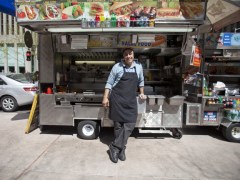 Link: http://www.npr.org/blogs/money/2012/04/25/151365350/how-to-make-it-in-the-food-truck-business
Summary: NPR sheds light on the competitive market economy of the food truck business in Manhattan,.
Original air date: April 27, 2012
Length: 14:24 min
Discussion Prompt: Restaurants are a common example of firms operating in a monopolistically competitive type of market structure. In what way do you think food trucks do or do not fall in that same market structure category? Explain using economic thinking.
Follow-up Prompt: The podcast discusses the particular strategies that food truck drivers might employ to be successful in their goal of maximizing profits. How do you think the type of market structure in which a firm operates impacts the strategic thinking and actions that firms engage in? You can make your comments relevant to the food truck example, or think more broadly and connect to other industries or examples.
 audioecon