
Summary: In this podcast, Brancaccio describes a term called “hyperbolic discounting” in which people look for instant gratification that in turn clouds their financial decisions.
Original Air Date: March 25, 2015
Length: 3 minutes and 58 seconds
Summary: In this podcast, Brancaccio describes a term called “hyperbolic discounting” in which people look for instant gratification that in turn clouds their financial decisions.
Original Air Date: March 25, 2015
Length: 3 minutes and 58 seconds
 Link: http://www.npr.org/blogs/money/2015/04/10/398811199/episode-616-how-solar-got-cheap
Summary: Solar power is becoming increasingly popular. The main reason is not due to environmental awareness but because of a market glut and a need to clear inventory.
Original Air Date: April 10, 2015
Length: 16 minutes

Summary: This podcast examines the extraordinary rise in textbook prices and how the situation is worsening due to students looking for alternatives ways of obtaining books. Supply and demand is featured.
Original Air Date: October 9, 2014
Length: 4 minutes 27 seconds

Link: http://www.npr.org/blogs/money/2014/01/24/265396928/when-a-65-cab-ride-costs-192
Summary: This podcast sheds light on supply and demand as well as elasticity using the well know car service Uber.
Original Air Date: January 24, 2014
Length: 4 minutes 9 seconds Note there is a longer version that addresses issues of fairness, rationing by time v. money, different profit maximizing strategies by firms
Discussion Prompt (1) for short or long version: Think about yourself as a consumer of Uber/Lyft services– how elastic is your demand for uber? How do you know? What factors do you think make your demand for an Uber ride more or less elastic? You can think about specific times, or you can think about comparing yourself to other people whose elasticity of demand might be different.
Discussion Prompt (2) for short or long version: This podcast focuses on the topic of ‘surge pricing’: how does this relate to price elasticity of supply? Is the supply of Uber drivers price elastic or inelastic? What factors might impact that?
Discussion Prompt (1) for long version: Planet Money asks this question: If this is how markets generally work (ex. Stock market, copper market), why is what Uber’s doing considered so strange? This podcast is from 2014 (useful to us because it explains Uber in detail because it was new). In the time that has passed, do you think people have come around to this ‘economic way of thinking’ about surge pricing? Why, why not?
Discussion Prompt (2) for long version: The podcast compares the pricing strategy of Home Depot with ‘ice salt/melt,’ where they don’t change the price but they do run out, to the strategy of Uber where they raise the price rather than ‘run out’. Economist Richard Thaler notes that these choices represent different profit maximizing strategies by firms focusing on long-run vs. short-run strategies. What does he mean here? How do these actions represent different profit-maximizing strategies by these firms? Do you think one is ‘more fair’?
Written Prompt: Read this related article: Cohen, P., Hahn, R., Hall, J., Levitt, S., & Metcalfe, R. (2016). Using big data to estimate consumer surplus: The case of uber (No. w22627). National Bureau of Economic Research. Part of what makes this article innovative, is that it provided a ‘real-life’ consumer surplus estimate drawn from actual consumer data. Why do you think that it might have been hard to determine consumer surplus in real life before Uber (and similar apps/services)? Can you make any other links between this article and the podcast?
 Link: http://www.npr.org/blogs/money/2014/11/28/366793693/episode-586-how-stuff-gets-cheaper
Summary: The Planet Money team looks at how some things get cheaper over time. The podcast hosts visit a company called Monoprice, whose job it is to find out ways to make things cheaper–in other words, a lot of detective work.
Original Air Date: November 28, 2014
Length: 14 minutes 11 seconds
Prompt: Write a brief letter to Monoprice with your thoughts on their job. Is it efficient? Is it cost-productive?
 Link: http://www.econtalk.org/archives/2014/08/daphne_koller_o.html
Summary: Host Russ Roberts of Econtalk interviews Daphne Koller of Coursera about the rise of MOOCs (Massive Open Online Course) and the impact online learning will have on universities and learning in general.
Original Air Date: August 25, 2014
Length: 63 min
 Link: http://www.npr.org/blogs/money/2014/08/15/340669390/episode-561-how-the-future-looked-50-years-ago
Summary: Planet Money Podcast visits the year 1964 in order to see how people thought the future would turn out. It is amazing how difficult it is to predict the future and how technology changes throughout the years.
Original Air Date: August 15, 2014
Length: 22 min
Link: http://www.econtalk.org/archives/2014/07/sam_altman_on_s.html
Summary: Russ Roberts, host of EconTalk talks with Sam Altman, president of accelerating firm Y Combinator about the nature of entrepreneurship, funding companies, the potentials of start-ups, and the innovation that spills from technological advancement.
Original Air Date: July 28, 2014
Length: 61 min
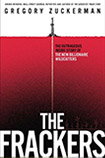 Link: http://www.econtalk.org/archives/2014/06/gregory_zuckerm.html
Summary: Russ Roberts, host of Econtalk, interviews Gregory Zuckerman, author of The Frackers: The Outrageous Inside Story of the New Billionaire Wildcatters about the rise of the hydraulic fracturing, its developmental stages and the eventual energy revolution.
Original Air Date: June 26, 2014
Length: 61 min
Link: http://www.econtalk.org/archives/2014/02/brynjolfsson_on.html
Summary: Erick Brynjolfsson, Professor of Management at MIT, talks about the new age of economic development and activities that will be dominated by intelligent machines and computers.
Original Air Date: February 3, 2014
Length: 59 min
 audioecon