Archive for the ‘Politics & economics’ Category
 Link: http://freakonomics.com/2014/10/02/fixing-the-world-bang-for-the-buck-edition-a-new-freakonomics-radio-podcast/
Summary: Return on Investment (ROI) analyzes at the most efficient way to spend money. An example given is the difference between curing malaria and HIV/AIDS. To cure malaria, it would cost about $1,000 per person, while it would cost ten times that to cure HIV/AIDS, and it is decided that they would rather save 10 people from malaria before they save one from HIV/AIDS. The United Nations, with their Millennium Development Goals coming to a close, will be looking to set new goals in 2015, to be completed by 2030. One of the issued they will focus on is how they are setting goals, and how to be more efficient with the help of the Return on Investment analysis.
Original Air Date: October 2, 2014
Length: 43 minutes 34 seconds
Prompt / Discussion: You are a member of the United Nations, and are put in charge of coming up with new development goals for 2015. You have $100 billion to invest in various development aid. Discuss how you would prioritize between an important, expensive goal (such as getting all kids into school, which was one of the Millennium Development Goals), and something that might not be seen as highly important, but cost effective.
 Link: http://www.npr.org/blogs/money/2013/09/20/224511346/episode-487-the-trouble-with-the-poverty-line
Summary: The Planet Money team investigates the outdated qualifications for the Poverty Line in America and the need for a new formula to alleviate the suffering. This podcast includes a brief history of the Poverty Line.
Original Air Date: September 20, 2013
Length: 11 minutes 47 seconds
 Link: http://www.marketplace.org/topics/your-money/my-biggest-financial-lesson/kenneth-feinberg-placing-value-life
Summary: Kenneth Feinberg discusses the reality of compensating families of victims of horrific tragedies. He advises we all plan for tomorrow.
Original Air Date: March 27, 2015
Length: 3 minutes 35 seconds
 Link: http://www.npr.org/blogs/money/2014/08/14/340356790/should-we-kill-the-100-bill
Summary: The Planet Money team investigates the $100 bill and found that over two-thirds of the bills are overseas. Additionally, they assume the bills are used for illegal activities due to their convenience.
Original Air Date: August 14, 2014
Length: 6 minutes 10 seconds
 Link: http://www.npr.org/blogs/money/2014/03/06/286861541/does-raising-the-minimum-wage-kill-jobs
Summary: Minimum wage is a hot topic in the economic realm. In this podcast the same study is done three times resulting in different outcomes on the pros and cons of raising the minimum wage.
Original Air Date: March 6, 2014
Length: 4 minutes 32 seconds
 Link: http://www.npr.org/blogs/money/2013/08/16/212645252/episode-480-the-charity-that-just-gives-people-money
Summary: The GiveDirectly charity gives money to the poor and asks for nothing in return. The Planet Money team takes a quick look at this strategy.
Original Air Date: August 16, 2013
Length: 6 minutes 12 seconds
Prompt: Make a list of pros and cons for this strategy of aid to developing regions of the world.
 Link: http://www.npr.org/blogs/money/2012/12/07/166747693/episode-421-the-birth-of-the-dollar-bill
Summary: At one point in U.S. history there was close to 8,000 different types of currency circulating. The Civil War became a bottleneck and forced innovation, thus creating one unified currency.
Original Air Date: December 7, 2012
Length: 10 minutes 37 seconds
Link: http://www.econtalk.org/archives/2014/08/terry_anderson.html
Summary:Terry Anderson, distinguished Fellow at the Property and Environment Research Center (PERC) and Senior Fellow at the Hoover Institute talks about free-market environmentalism and property rights that can protect natural resources. One of the main points of his book Free Market Environmentalism which is currently being revised for its third addition, revolves around the idea of what makes market successful and how can the success of the free market model be applied to the protection of the environment.
Original Air Date: August 18, 2014
Length: 63 min
Link: http://www.econtalk.org/archives/2014/07/chris_blattman.html
Summary: Russ Roberts interviews Chris Blattman of Columbia University on the subject of radical poverty and how the infusion of cash affects growth, education and political behavior.
Original Air Date: July 21, 2014
Length: 71 min
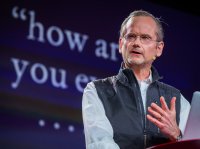 Link: http://www.npr.org/blogs/money/2014/08/01/336910418/episode-558-spending-big-money-to-fight-big-money
Summary: What is the role of money in politics? What is campaign finance and what is the Super PAC? How is it that the 1% fraction of the US population have the ability to spend as much as they want in order to influence political power? Planet Money interviews Lawrence Lessing of Harvard University on his idea to create a super PAC in order to fight Super PACs.
Original Air Date: August 1, 2014
Length: 16 min
 audioecon