Archive for the ‘Market structure’ Category
 Link: http://www.npr.org/templates/story/story.php?storyId=120624314
Summary: A look at the markets for prescription and generic drugs in the context of the impending patent expiration of a large portion of pharmaceuticals under the “patent cliff” of 2011. Discusses patents creating monopoly power for brand name drugs and compares that to the market for generics.
Length: 4:24 minutes
Original air date: November 4, 2009
 Link: http://www.freakonomics.com/2013/01/17/who-owns-the-words-that-come-out-of-your-mouth-a-new-freakonomics-radio-podcast/
Summary: A discussion of the use, intricacies, and reform of copyright law, set in the context of the dedicated use of copyright law by the estate of Winston Churchill. Includes an estimate of the cost per word to use Churchill quotes, and how higher prices per quote of Clementine Churchill result in a reduction in the use of quotes from his wife. Also includes a discussion of the obstacles to business created by the system of copyright / intellectual property law in Britain.
Original air date: January 17, 2013
Length: 2:21
 Link: http://www.npr.org/blogs/money/2012/09/11/160959685/episode-401-four-in-one
Summary: NPR visit Manhattan New York, Brooklyn New York, Germany and the moon in this four-story podcast to consider: the effect of taxis on the infrastructure of a city; the craftsmanship of a bespoke tailor; the complicated aspects of the employment sector in the European Union; and the clever life insurance strategies of the Apollo 11 crew before their launch to the moon.
Original air date: September 11, 2012
Length: 22:21 min
 Link: http://www.npr.org/blogs/money/2012/09/04/160555540/episode-279-the-failure-tour-of-new-york
Summary: Economist Tim Harford, senior columnist for the Financial Times, argues that failure is necessary for success and that economic growth is a product of learning from mistakes.
Original air date: September 04, 2012
Length: 14:22 min
 Link: http://www.npr.org/blogs/money/2013/01/11/169150969/episode-429-the-price-of-things-we-love
Summary: Three short features highlight: (1) the impact on the publishing industry of the shift toward e-books; (2) why legos remain so popular and so expensive; and (3) the technological development and potential market implications of 3D printers.
Original air date: January 11, 2013
Length: 15:15
 Link: http://www.npr.org/blogs/money/2012/05/18/153004617/how-do-you-decide-who-gets-lungs
Summary: This podcast outlines the organ market or rather the non-existent, scarce organ market that doctors unfortunately have to face when they put their patients on an organ waiting list.
Original air date: May 18, 2012
Length: 15:11 min
Discussion Prompt (1): Consider the ten principles of economics that Mankiw discussions in Chapter 1. How do they relate to the situation in this podcast?
Discussion Prompt (2): This podcast gives examples of how different systems for allocating lungs create incentives (for doctors, for patients) and thus impact choice. How do you see that incentives, choices and outcomes are impacted if they allocation is based on: whoever is sickest? What if they allocation system is based on who is on the waiting list first? What if the system was a market-based system based on ability to pay? Use examples from the podcast or your own thinking that expands beyond the podcast content.
Follow-up Prompt: You all make some good observations here and lead me to think that it is also important to think about the goal of the system – is the goal to be fair? is the goal for patients not to have to wait? is the goal to have the most number of patients live ? Is the goal to save the sickest? How do you think that understanding the ‘goal’ helps us to see the problems and options for allocation?
Written Assignment Prompt: The podcast mentions doctors signing up patients for lung transplants before they need or are sick enough for them. What are the ethical issues associated with such a decision? Why don’t we see markets at work in this scenario? How might you create an alternate system for allocating this precious item?
 Link: http://www.npr.org/blogs/money/2012/04/25/151365350/how-to-make-it-in-the-food-truck-business
Summary: NPR sheds light on the competitive market economy of the food truck business in Manhattan,.
Original air date: April 27, 2012
Length: 14:24 min
Discussion Prompt: Restaurants are a common example of firms operating in a monopolistically competitive type of market structure. In what way do you think food trucks do or do not fall in that same market structure category? Explain using economic thinking.
Follow-up Prompt: The podcast discusses the particular strategies that food truck drivers might employ to be successful in their goal of maximizing profits. How do you think the type of market structure in which a firm operates impacts the strategic thinking and actions that firms engage in? You can make your comments relevant to the food truck example, or think more broadly and connect to other industries or examples.
Link: http://www.npr.org/blogs/money/2012/03/27/149484066/the-tuesday-podcast-what-a-16th-century-guild-teaches-us-about-competition

Summary: Sheilagh Ogilvie, an economic historian at Cambridge University, outlines the importance of guilds in the 16th century and how their political and economic structures parallel modern workplaces and markets.
Original air date: March 27, 2012
Length: 30:15 min
 Link: http://www.npr.org/blogs/money/2012/04/10/150368897/the-matzo-economy
Summary: A visit to the Manischewitz matzo factory as an illustration of niche industries. An illustration of the impact of regulations via religious restrictions.
Original Air Date: April 10, 2012
Length 21:19
Main story content begins: 2:24
Discussion Prompt: This podcast features the many rules, restrictions and regulations faced by the Manischewitz company. (1) How do you think these restrictions relate to concepts about different market structures that firms may operate in? (2) What do you see as the benefit to the Manischewitz company that comes from operating in this unique marketplace? What are the challenges? What benefits / challenges might face a new company seeking to join this industry?
Follow-up Prompt: How might technology and/or the passage of time impact the degree to which these restrictions help or hurt the Manischewitz company? Do you think this might be different for other industries where barriers to entry are a component of the market structure?
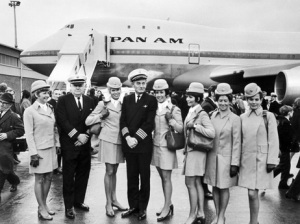
Link: http://www.npr.org/blogs/money/2011/12/09/143466204/the-friday-podcast-the-nasty-rotten-airline-business
Summary: In the context of the 2011 bankruptcy declaration by American Airlines, a discussion of the factors driving bankruptcies in the airline industry.
Original Air Date: December 9, 2011
Length 16:56
Main story content begins: 3:24
 Link: http://www.npr.org/templates/story/story.php?storyId=120624314
 audioecon