Archive for the ‘Labor market economics’ Category
Link: https://www.marketplace.org/shows/marketplace/goldman-sachs-to-invest-10-billion-in-black-women/
The COVID-19 pandemic has disproportionately affected black women, not only in growing unemployment rates but also in increased death rates. Goldman Sachs has committed to $10 billion going toward expanding economic opportunities for black women, having found that a black woman’s wealth is 90% lower than a white man’s, in addition to the struggles the pandemic has presented for the black community. This episode of Marketplace also discusses how restaurants will benefit from the relief package and why grocery stores are making investments into robots.
Original Air Date: March 12, 2021
Length: 28 minutes 34 seconds
Link: https://www.npr.org/2021/02/26/971873769/empty-houses-reclaimed
Housing insecurity is a major issue that is facing our nation especially in a pandemic with millions out of jobs. As a result of this people have began taking their living situation into their own hands. A group in California who call themselves the “Reclaimers” decided to break into and reclaim vacant houses owned by the state. State officials decided to not evict any of these new tenets but instead leased the properties out to the housing authority, which allowed for the homes to be part of a transitional housing program. Sasha Atkins, one of the “Reclaimers”, discusses how housing insecurity could be lessened greatly if more states employed programs like the one put forth in California.
Original Air Date: March 1, 2021
Length: 9 minutes and 49 seconds
Link: https://www.npr.org/2021/03/12/976465414/the-even-more-minimum-wage
This podcast discusses the history and the impact of low wages received by restaurant workers. The federal “tipped” minimum wage has remained stagnant for almost 30 years, while the standard minimum wage has been increased 5 times throughout that time. Policy makers in Washington DC are now proposing the Raise the Wage Act, which, if enacted, would raise the federal minimum wage incrementally to $15 an hour for all workers in all industries, including tipped workers.
Original Air Date: March 17, 2021
Length: 21 minutes and 22 seconds
Link: https://www.npr.org/2019/05/03/720139562/episode-910-economics-sexism-data
As International Women’s Month begins, this podcast by Planet Money helps highlight some of the issues involving sexism and economics. At the time Alice Wu was an economics undergraduate at UC Berkeley and had found an online job forum but was shocked to see the attitude and banter relating to women in the field of economics. She then used her econ skills to analyze the inherent bias found on the site and put out a report on her findings, leading to many woman in the economic field sharing their stories and exposing some of the sexism they have had to face.
Discussion Prompt: What are some ways that social issues, such as sexism can be address throughout a whole field like economics?
Original Air Date: May 3, 2019
Length: 24 minutes 20 seconds
Link: https://www.stlouisfed.org/timely-topics/educated-workers-and-americas-competitiveness
The United States used to lead the world in their percentage of college graduates. Today, the U.S is lagging behind countries like Japan and South Korea. Dr. Monge-Naranjo from the Federal Reserve Bank discusses how this isn’t necessarily a bad thing, and how the United States can benefit from the ideas and technologies being produced elsewhere.
Original Air Date: August 31 2020
Length: 3 minutes 13 seconds
Discussion Prompt: What other ways can this idea benefit the United States? What ways could this be harmful to the United States? Is there any significance or advantage to being “number 1” in terms of college educated workers?
Link: https://www.weforum.org/agenda/2020/09/great-reset-podcast-financing-sustainable-recovery-imf/
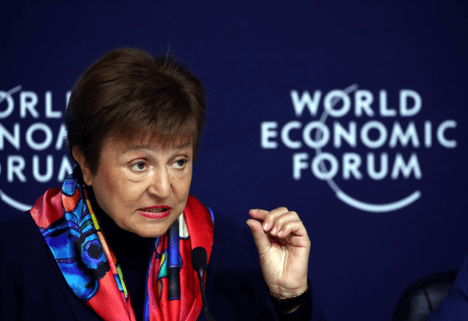
IMF chief Kristalina Georgieva discusses the need for sustained financial support from governments across the globe. Georgieva emphasizes that policymakers must keep in mind the future of their economies, and promote job creation in sectors which are developing, such as the green energy sector. Additionally, Georgieva discusses the need for investment everywhere in order to inhibit worsening global inequalities.
Original Air Date: September 11, 2020
Length: 16 minutes 11 seconds
Link: https://www.npr.org/2020/03/27/822944544/episode-986-america-unemployed
Within the past week, over 3 million people have filed for unemployment, a record number in the United States. Unemployment insurance was intended to help people, while also providing motivation to seek work. Seeking work, however, is close to impossible when you cannot leave your home.
Original Air Date: March 28, 2020
Length: 22 minutes 58 seconds
Discussion Prompt: What are the incentives inherent in the unemployment insurance policy? Do you believe the pandemic will change who qualifies for unemployment/how accessible unemployment benefits in either the short- or the long-run?
Link: https://www.marketplace.org/shows/marketplace-morning-report/unemployment-claims-covid-19-automaker-factories-evictions/
Unemployment benefit registrations have increased dramatically in the past days. The U.S. government is trying to ensure that the current health crisis does not cause a long-term economic crisis. The government is also putting a hold on evictions and foreclosures in certain instances as well in order to prevent an increase in homelessness.
Original Air Date: March 19, 2020
Length: 7 minutes 21 seconds
Discussion Prompt: What are the economic ideas behind the strategies being implemented so far? What other ways could the government support those who lose their jobs during this health crisis? How can the government fund activities such as putting holds on evictions? What are the costs and benefits to be considered here?
 Link: https://www.npr.org/sections/money/2018/02/02/582843102/how-are-they-doing-now
Summary: When the recession hit, many workers within the United States not only lost their jobs, but they also had to cut back a significant amount of their hours. In this podcast, THE INDICATOR checks on three groups to see how they are doing now, part-time workers who want to be full-time, African-American unemployment, and people without college degrees.
Original Air Date: February 2, 2018
Length: 5 minutes 34 seconds
 Link: https://www.npr.org/sections/money/2018/01/31/582224091/janet-yellen-s-mystery-story
Summary: Former head of the Federal Reserve of America, Janet Yellen, communicated about inflation, uncertainty, and monetary policy in one of her speeches last fall. With the current low inflation, the Fed hopes more consumers go out and purchase more goods to help reach the ideal inflation in the country. But as inflation remains low, the Fed is left puzzling over this mystery.
Original Air Date: January 31, 2018
Length: 6 minutes 48 seconds




 audioecon