Archive for the ‘Globalization’ Category
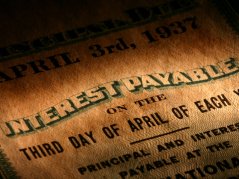 Link: http://www.npr.org/blogs/money/2013/10/10/230914894/what-a-u-s-default-would-mean-for-pensions-china-and-social-security
Summary: What would happen if the U.S. defaults? According to experts in the field, a U.S. default would lead to the inability for the government to pay back their loans which in turn could have damaging effects to the social security program, pension accounts and foreign direct investment in treasury bonds. Also considers the impact on China, as a U.S. bondholder.
Original Air Date: October 10, 2013
Length: 4 min
 Link: http://www.npr.org/blogs/money/2013/08/23/214928040/episode-482-why-the-u-s-keeps-sending-weapons-to-egypt
Summary: A discussion of the economic and business factors within the U.S. that complicate the question of whether the U.S. should be sending aid in the form of weapons to Egypt during its ongoing political crisis.
Length: 13:08 min
Original air date: August 23, 2013
 Link: http://www.npr.org/blogs/money/2013/06/11/190746413/episode-465-myanmar-opens-up
Summary: In the context of its t-shirt project (see tags) Planet Money considers whether or not producing t-shirts in Bangladesh is helpful to the country’s economy and people. This debate follows the tragedies in the garment industry in Bangladesh in 2012-2013. Features an interview with a woman who was worker in a garment factory in Bangladesh in the late 90s, and is now a labor activist, and a discussion of the role of garment manufacturing in the economic development of many countries.
Length: 16:48
Original air date: May 14, 2013
 Link: http://www.npr.org/blogs/money/2013/06/11/190746413/episode-465-myanmar-opens-up
Summary: Planet Money explores the challenges of businesses entering a newly open economy. An entrepreneur faces first-mover challenges common to developing countries, including lacking financial and telecommunications infrastructure. An executive from Coca-Cola revisits the company’s history as the company introduces Coke to a new audience and challenges its reputation as a luxury good.
Length: 18:39
Original air date June 11, 2013
 Link: http://www.npr.org/blogs/money/2013/04/26/179295426/episode-454-the-lollipop-war
Summary: Planet money explores the struggle between two iconic American industries—the lollipop makers and the sugar growers— over “fair” regulations set forth by Congress in the farm bill.
Length: 19:19 min
Original air date: April 26, 2013
Discussion Prompt: What are the economic impacts of the subsidy on sugar for: farmers, candy producers, U.S. citizens, U.S. consumers? Why do you think sugar subsidies persist, and why do you think this fight about sugar has been ongoing in the U.S. government for so many years?
Link: http://www.econtalk.org/archives/_featuring/dani_rodrik/

Summary: Dani Rodrik of Harvard University discusses how globalization factors do not necessarily produce negative implications. He argues that work displacement due to technological advancements and productivity increase can be managed by different political and social policies varying from country to country.
Original air date: April 11, 2011
Length: 1:00
Link: http://www.thisamericanlife.org/radio-archives/episode/355/the-giant-pool-of-money

Summary: Discusses how the roots of the 2008 Wall Street meltdown lay in the housing crisis. Also highlights links to international finance.
Original air date: May 9, 2008
Length: 60:00
 Link: http://www.npr.org/blogs/money/2012/05/04/152028558/in-a-leaderless-world-who-wins
Summary: Interview with Ian Bremmer discussing his book, Every Nation for Itself: Winners and Losers in a G-Zero World and issues of international politics and economics in a multipolar (or zero-polar) world.
Original Air Date: May 4, 2012
Length: 15:23
Main story content begins: 2:37
 Link: http://www.npr.org/blogs/money/2010/10/08/130436221/the-friday-podcast-buttons-and-other-connectors
Summary: A profile of American manufacturing by visiting two U.S. factories, one struggling to compete in a global economy, and another thriving.
Original Air Date: October 8, 2010
Length 26:35
Main story content begins: 2:22
Discussion Prompt: Consider the two firms discussed in the podcast in the context of different types of market structures (ex. monopolistic competition, perfect competition, oligopoly, monopoly). What type of market structure do you think each firm is operating in? Explain why you think this using the characteristics of each market type and be sure to share your analysis.
Follow-up Prompt: Review your peer’s discussion posts. Try to come to a further developed and agreed upon idea of what type of market structure each firm might be operating. Here are some factors to consider: (1) number of firms – note that how we count the firms depends on how we’re defining the product/market. Note that many companies compete in a global market now, so location is not as important as the substitutability of the products of potential competitor firms. (2) type of product produced: note that in the oligopoly structure firms can be producing products that are identical to one another OR differentiated, that is not as important for oligopoly as is the fact that there are a few firms controlling the market; for monopolistic competition the products are differentiated, but relatively substitutable – so that they can be considered within one market; finally monopolists have a unique product with no close substitutes (substitutes that may exist are not close). (3) barriers to entry / ease of entry: one of the key things to consider here is the presence of patents, which serve as barriers to entry for a period of time. Note that in monopolistic competition there are low/no barriers to entry, with higher barriers in oligopoly and highest in monopoly. With patents we also have to think about whether they are making a product differentiated or making it completely unique.
 Link: http://www.npr.org/blogs/money/2010/06/04/127480338/the-friday-podcast-india-s-economy-is-booming-but-not-for-everybody
Summary: Considers questions about economic disparity in benefits from economic growth by talking with a cobbler who lives on the streets and economic policy makers in India.
Original air date: June 4, 2010
Length 23:56
Main story content begins: 2:27

 audioecon