Archive for the ‘Government’ Category
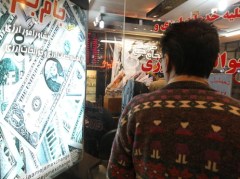 Link: http://www.npr.org/blogs/money/2012/01/17/145361054/the-tuesday-podcast-do-sanctions-work
Summary: Interview with Economist Gary Hufbauer to consider the effectiveness of sanctions as a political tool, in the context of imposition of new sanctions to Iran. Includes a profile of life in Iran in the early 1990s under U.N. sanctions.
Original Air Date: January 17, 2012
Length 22:54
Main story content begins: 2:46
 Link: http://www.npr.org/blogs/money/2011/11/04/142016962/the-friday-podcast-how-fear-turned-a-surplus-into-scarcity
Summary: Story of the origins of the 2008 global rice shortage “that wasn’t”.
Original Air Date: November 4, 2011
Length: 24:33
Main story content begins: 2:12
 Link: http://www.npr.org/blogs/money/2012/05/04/152028558/in-a-leaderless-world-who-wins
Summary: Interview with Ian Bremmer discussing his book, Every Nation for Itself: Winners and Losers in a G-Zero World and issues of international politics and economics in a multipolar (or zero-polar) world.
Original Air Date: May 4, 2012
Length: 15:23
Main story content begins: 2:37
 Link: http://www.npr.org/blogs/money/2012/04/10/150368897/the-matzo-economy
Summary: A visit to the Manischewitz matzo factory as an illustration of niche industries. An illustration of the impact of regulations via religious restrictions.
Original Air Date: April 10, 2012
Length 21:19
Main story content begins: 2:24
Discussion Prompt: This podcast features the many rules, restrictions and regulations faced by the Manischewitz company. (1) How do you think these restrictions relate to concepts about different market structures that firms may operate in? (2) What do you see as the benefit to the Manischewitz company that comes from operating in this unique marketplace? What are the challenges? What benefits / challenges might face a new company seeking to join this industry?
Follow-up Prompt: How might technology and/or the passage of time impact the degree to which these restrictions help or hurt the Manischewitz company? Do you think this might be different for other industries where barriers to entry are a component of the market structure?
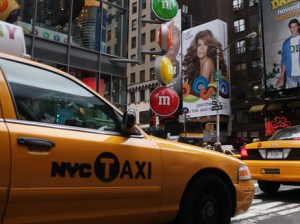 Summary: A history of taxicabs in New York sheds light on why a single taxi medallion, which serves as a permit to operate a cab in the city, would be sold for $1 million.
Link: http://www.npr.org/blogs/money/2011/11/29/142866785/the-tuesday-podcast-why-does-a-taxi-medallion-cost-1-million
Original Air Date: November 29, 2011
Length 19:40
Main story content begins: 0:00 (Planet Money indicator discusses the price of a taxi medallion itself).
 Link: http://www.npr.org/blogs/money/2012/02/14/146889446/the-tuesday-podcast-lighthouses-autopsies-and-the-federal-budget
Summary: Discussion with Charlie Wheelan, author of Naked Economics, of the role of government in provision of public goods and the definition of public goods.
Original Air Date: February 14, 2012
Length 21:49
Main story content begins: 2:16

Link: http://www.npr.org/blogs/money/2010/01/podcast_an_economist_gets_ston.html
Summary: Interview with economist Jeffrey Miron of the market for illegal drugs and the economic impact of ‘legalizing’ marijuana through implementation of medical marijuana laws at the state level.
Original Air Date: January 27, 2010
Length 19:03
Main story content begins: 0:00 (Planet Money indicator discusses contribution of marijuana to California economy)
Class Discussion Question: Discuss the conclusions reached in the podcast about the interaction of the elasticity of drugs and drug legalization. What impact do you think this would have on, for example, the marijuana industry when states legalize this product?
Written Assignment Prompt: Marijuana is California’s largest cash crop, with about 1,000 stores selling pot in LA alone. Predict the supply and demand of marijuana for Los Angeles that would come with the legalization of the drug.
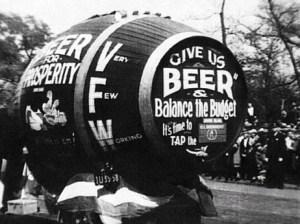 Link: http://www.npr.org/blogs/money/2010/08/03/128960709/the-tuesday-podcast
Summary: As part of a quest to prove whether President Roosevelt drank Moonshine at the White House, the Planet Money team discusses the history and economics of prohibition.
Original Air Date: August 3, 2010
Length 18:05
Main story content begins: 1:31
Discussion Prompt: Using what you know about elasticity and what you learned from this podcast, what would be your ‘economic expert’ opinion on a proposal to implement a tax specifically on the purchase of marijuana (similar to a tax specifically on alcohol) in the sates where marijuana sales are legal? Connect your economic opinion to details from the podcast. If you use outside information, provide at minimum links for citations.
Follow-up Prompt: A question to expand your application of elasticity ideas: If marijuana were legalized (and taxed), what other markets might be impacted (related goods)? How might the legalization impact what goods consumers consider to be substitutes for marijuana? Do you think it would change?
 Link: http://www.npr.org/blogs/money/2011/05/24/136618552/the-tuesday-podcast-do-we-need-the-imf
Summary: Discussion of the IMF and whether the need for it, or its responsibilities should change. Includes an interview with Simon Johnson, IMF Chief Economist 2007-2008
Original air date: May 24, 2011
Length: 18: 16
Main story content begins: 2:10
 audioecon