
Summary: How much can a 19th century land lottery tell us about today’s income inequality? Would giving cash to a poor family effect the trajectory of its future? The statistics say no.
Original Air Date: September 26, 2013
Length: 29 min
Summary: How much can a 19th century land lottery tell us about today’s income inequality? Would giving cash to a poor family effect the trajectory of its future? The statistics say no.
Original Air Date: September 26, 2013
Length: 29 min
Summary: What would happen if the U.S. defaults? According to experts in the field, a U.S. default would lead to the inability for the government to pay back their loans which in turn could have damaging effects to the social security program, pension accounts and foreign direct investment in treasury bonds. Also considers the impact on China, as a U.S. bondholder.
Original Air Date: October 10, 2013
Length: 4 min
Summary: What makes us choose the places we decide to settle down and start a family? Does electronic banking effect the way we spend money or in other words how we do “mental accounting?” Freakonomics Radio sheds a bit of light in the different ways people decide where to live and the generational shift between hard cash and credit.
Original Air Date: October 3, 2013
Length: 26 min
Summary: Contrary to conventional wisdom about e-book publishing and its negative impact on book sales, it turns out that flexible pricing on e-books actually bring in new readers.
Original Air Date: December 27, 2012
Length: 4 min
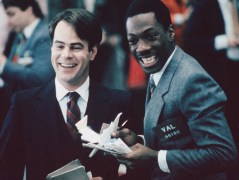 Link: http://www.npr.org/blogs/money/2013/07/09/200401407/episode-471-the-eddie-murphy-rule
Summary: The Planet Money team consider the movie Trading Places and it’s scheme to make millions short-selling commodity futures (specifically frozen orange juice concentrate). Includes explanations of commodity futures trading, short-selling, and regulation of futures trading.
Length: 26:05 min
Original air date: July 9, 2013
Summary: NPR outlines the history of the U.S. national debt, from the first decision to create a government debt to the first and only time of paying off the complete debt, to the $16 trillion debt that the U.S. is currently facing.
Original air date: August 07, 2012
Length: 20:03 min
Summary: Planet Money considers the debate in the investment world over whether the company Herbalife is a pyramid scheme. Also features a discussion on the ethics of short-selling.
Original air date: January 18, 2013
Length: 17:00
 Link: http://www.npr.org/blogs/money/2012/07/03/156222428/episode-384-the-little-lie-that-rocked-the-banks
Summary: The Planet Money team analyzes the externalities of the London Interbank Offered Rate (LIBOR) scandal and its effects on the international financial sphere.
Original air date: July 03, 2012
Length: 20:42 min
 Link: http://www.npr.org/blogs/money/2012/05/15/152774525/where-dollar-bills-come-from
Summary: NPR visits Dalton, MA where the dollar bill paper mill is located. The podcast outlines the historical relevance along with the contemporary role of paper money in today’s society.
Original air date: May 15, 2012
Length: 19:03
Link: http://www.npr.org/blogs/money/2012/04/24/151224338/were-headed-for-a-fiscal-cliff-should-we-jump

Summary: The team outlines the fiscal policies slated to be enacted in January after the presidential election. Simon Johnson, an economist and professor at MIT, explains the harsh realities of the “fiscal cliff” which the year 2013 will bring for the U.S. economy.
Original air date: April 24, 2012
Length: 21:20 min




 audioecon