Archive for the ‘Economic Growth & Development’ Category
 Link: http://www.npr.org/blogs/money/2011/03/15/134432054/a-shrinking-city-knocks-down-neighborhoods
Summary: How do you shrink down a city? In the past decade, the people of Youngstown, Ohio have experienced an 18% decrease in their population. Realizing that conventional economic development and city planning are not bringing efficient production, Youngstown has decided that expansion is not part of their agenda.
Original Air Date: March 15, 2011
Length: 4 min
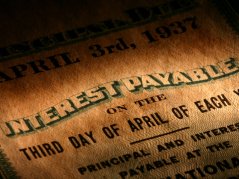 Link: http://www.npr.org/blogs/money/2013/10/10/230914894/what-a-u-s-default-would-mean-for-pensions-china-and-social-security
Summary: What would happen if the U.S. defaults? According to experts in the field, a U.S. default would lead to the inability for the government to pay back their loans which in turn could have damaging effects to the social security program, pension accounts and foreign direct investment in treasury bonds. Also considers the impact on China, as a U.S. bondholder.
Original Air Date: October 10, 2013
Length: 4 min
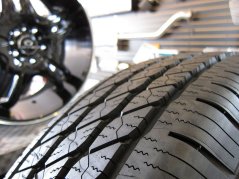 Link: http://www.npr.org/blogs/money/2013/06/21/194326482/episode-467-tires-taxes-and-the-grizz
Summary: The prices of tires have been rising over the past five years primarily due to a rise in the price of inputs such as rubber. A tariff imposed by the U.S. government on Chinese tire imports has also contributed to the increase of tire prices. Planet Money outlines the negative impacts on U.S. tire companies resulting from the tariff.
Original Air Date: June 21, 2013
Length: 14 min
 Link: http://www.npr.org/blogs/money/2013/08/06/209598383/episode-477-waiting-for-robot-nannies
Summary: A discussion of the cultural obstacles to women in Japan working full time. Includes consideration of the following: impact on the Japanese economy overall, impact on demographics, related issues in the childcare industry, including impediments in the form of unintended consequences of government regulations .
Length: 14:22 min
Original air date: August 6, 2013
 Link: http://www.npr.org/blogs/money/2013/06/11/190746413/episode-465-myanmar-opens-up
Summary: In the context of its t-shirt project (see tags) Planet Money considers whether or not producing t-shirts in Bangladesh is helpful to the country’s economy and people. This debate follows the tragedies in the garment industry in Bangladesh in 2012-2013. Features an interview with a woman who was worker in a garment factory in Bangladesh in the late 90s, and is now a labor activist, and a discussion of the role of garment manufacturing in the economic development of many countries.
Length: 16:48
Original air date: May 14, 2013
 Link: http://www.npr.org/blogs/money/2013/06/11/190746413/episode-465-myanmar-opens-up
Summary: Planet Money explores the challenges of businesses entering a newly open economy. An entrepreneur faces first-mover challenges common to developing countries, including lacking financial and telecommunications infrastructure. An executive from Coca-Cola revisits the company’s history as the company introduces Coke to a new audience and challenges its reputation as a luxury good.
Length: 18:39
Original air date June 11, 2013
 Link: http://www.freakonomics.com/2012/09/24/the-tale-of-the-15-tomato-a-new-freakonomics-radio-podcast/
Summary: Steven Levitt discusses his favorite fast foods and considers what our modern interest it doing things ‘old school’ (growing vegetables, baking, brewing) tells us about the current state of economic affairs (hint: it is good!).
Original air date: September 24, 2012
Length: 10:10
 Link: http://www.freakonomics.com/2010/03/24/freakonomics-radio-what-would-the-world-look-like-if-economists-were-in-charge/
Summary: To what extent would the world change if economists ran the world? The podcast interviews Estonian prime minister, Mart Laar, who revamped his economy based on the teachings of Milton Friedman; and Friedman’s grandson, Patri Friedman, who want to build cities in the middle of the ocean.
Original Air Date: March 24, 2010
Length: 20 min
 Link: http://www.npr.org/blogs/money/2012/09/11/160959685/episode-401-four-in-one
Summary: NPR visit Manhattan New York, Brooklyn New York, Germany and the moon in this four-story podcast to consider: the effect of taxis on the infrastructure of a city; the craftsmanship of a bespoke tailor; the complicated aspects of the employment sector in the European Union; and the clever life insurance strategies of the Apollo 11 crew before their launch to the moon.
Original air date: September 11, 2012
Length: 22:21 min
 Link: http://www.npr.org/blogs/money/2012/09/07/160748725/episode-400-what-two-pasta-factories-tell-us-about-the-italian-economy
Summary: NPR visits Southern Italy and a Barrila pasta plant in order to outline the importance of leadership and positive peer pressure in the workforce.
Original air date: September 07, 2012
Length: 26:15
 audioecon