Author Archive
 Link: http://www.npr.org/blogs/money/2013/09/11/221417806/episode-485-whats-your-major
Summary: How much does your undergraduate major affect your lifetime earnings? Planet Money gives an overview of a recent study revealing the most and least lucrative undergraduate majors and the monetary gap that exists between them.
Original Air Date: September 11, 2013
Length: 16 min
 Link: http://www.npr.org/blogs/money/2013/10/04/229224964/episode-489-the-invisible-plumbing-of-our-economy
Summary: In a time of instantaneous internet, why does it take so long for money to process from one checking account to another? Planet Money Podcast attempts to figure out the invisible pipes that move money around America.
Original Air Date: October 4, 2013
Length: 22 min
 Link: http://www.npr.org/blogs/money/2011/09/21/140643696/operation-twist-explained-in-4-easy-steps
Summary: How does the Fed lower interest rates? This podcast gives a quick, four step process on how the Fed can lower interest rates in order to combat unemployment.
Original Air Date: September 21, 2011
Length: 4 min
 Link: http://www.npr.org/blogs/money/2013/10/10/229126568/is-welfare-a-rational-alternative-to-work
Summary: Michael Tanner, a senior fellow from Cato Institutes argues that choosing welfare may be a sound economic decision. How does the system set up choice for individuals? Considers the system, its incentives and the implications for rational economic actors.
Original Air Date: October 4, 2013
Length: 6 min
 Link: http://www.npr.org/blogs/money/2011/06/06/136896920/the-indie-rock-club-behind-omahas-100-million-creative-boom
Summary: Although Omaha has been a town devoted to business, it has never harbored any musical ambitions for small local bands. That is, until Robb Nansel and Jason Kulbel decided to bring life to the Slowdown and Film Streams, grabbing the attention of community artists and local developers.
Original Air Date: June 3, 2011
Length: 5 min
 Link: http://www.npr.org/blogs/money/2011/03/15/134432054/a-shrinking-city-knocks-down-neighborhoods
Summary: How do you shrink down a city? In the past decade, the people of Youngstown, Ohio have experienced an 18% decrease in their population. Realizing that conventional economic development and city planning are not bringing efficient production, Youngstown has decided that expansion is not part of their agenda.
Original Air Date: March 15, 2011
Length: 4 min
 Link: http://www.npr.org/blogs/money/2011/09/16/140464797/a-slow-motion-bank-run-in-europe
Summary: What are the potential risks and negative spillovers of “big banks” failing? This podcast outlines why big banks, for example big French banks cannot default because of the havoc that would befall in an economy.
Original Air Date: September 14, 2011
Length: 3 min
 Link: http://freakonomics.com/2013/09/26/would-a-big-bucket-of-cash-really-change-your-life-a-new-freakonomics-radio-podcast/
Summary: How much can a 19th century land lottery tell us about today’s income inequality? Would giving cash to a poor family effect the trajectory of its future? The statistics say no.
Original Air Date: September 26, 2013
Length: 29 min
 Link: http://www.npr.org/blogs/money/2013/01/04/168627298/3-d-printing-is-kind-of-a-big-deal
Summary: Is the future of manufacturing here? What is 3-D printing and how will it be applied in the future. This podcast gives a quick overview on the potential market and technological capacities of 3-D printing.
Original Air Date: January 4, 2013
Length: 5 min
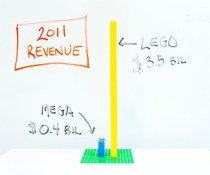 Link: http://www.npr.org/blogs/money/2012/12/13/167055503/why-legos-are-so-expensive-and-so-popular
Summary: Why are Legos so popular? How has this toy-construction behemoth survived and out-strategized competitors even after their 1989 patent expiration?
Original Air Date: December 13, 2012
Length: 5 min

 audioecon