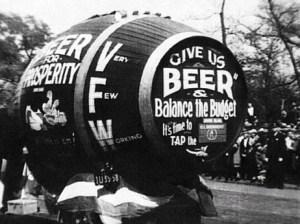
 Link: http://www.npr.org/blogs/money/2010/08/03/128960709/the-tuesday-podcast
Summary: As part of a quest to prove whether President Roosevelt drank Moonshine at the White House, the Planet Money team discusses the history and economics of prohibition.
Original Air Date: August 3, 2010
Length 18:05
Main story content begins: 1:31
Discussion Prompt: Using what you know about elasticity and what you learned from this podcast, what would be your ‘economic expert’ opinion on a proposal to implement a tax specifically on the purchase of marijuana (similar to a tax specifically on alcohol) in the sates where marijuana sales are legal? Connect your economic opinion to details from the podcast. If you use outside information, provide at minimum links for citations.
Follow-up Prompt: A question to expand your application of elasticity ideas: If marijuana were legalized (and taxed), what other markets might be impacted (related goods)? How might the legalization impact what goods consumers consider to be substitutes for marijuana? Do you think it would change?
 Link: http://www.npr.org/blogs/money/2011/05/24/136618552/the-tuesday-podcast-do-we-need-the-imf
Summary: Discussion of the IMF and whether the need for it, or its responsibilities should change. Includes an interview with Simon Johnson, IMF Chief Economist 2007-2008
Original air date: May 24, 2011
Length: 18: 16
Main story content begins: 2:10
 Link: http://www.npr.org/blogs/money/2011/02/25/134059518/the-friday-podcast-the-difference-between-egypt-and-libya
Summary: Discussion of how differing political economy structures in Egypt and Libya impacted the political transitions in each state. Includes a discussion of the resource curse problem of resource-rich developing countries.
Original air date: February 25, 2011
Length 20:03
Main story content begins: 2:05
 Link: http://www.npr.org/blogs/money/2010/05/_after_the_downgrade_ap.html
Summary: Discussion of the rating agency process of providing country bond ratings, within the context of the Euro crisis.
Length 21:08
Original air date: May 7, 2010
Main story content begins: 8:00
Planet Money indicator discussion of NY Stock Exchange “circuit breaker’ and its backfire on May 6, 2010) 1:10 – 8:00
 Link: http://www.npr.org/blogs/money/2010/07/09/128413796/the-friday-podcast-lebronomics
Summary: Discussion of the potential “happiness” impact of Lebron James’ decision whether to leave Ohio for Miami, LA, or NY. Also a discussion of aftermarket ticket sales.
Original Air Date: July 9, 2010
Length 25:42
Main story content begins: 3:36
“Planet Money indicator” Discussion of China / US currency exchange, currency manipulation debate: 1:44 – 3:23
Discussion Prompt (1) : How does this podcast relate to the concept of consumer surplus? Based on the idea of utility/happiness introduced in the podcast in what ways (and for whom) might utility have been increased by Lebron’s decision? In what ways might it have been decreased?
Follow-up Prompt (1): Consider the idea of utility as set out in the podcast. What do you think are the challenges of measuring ‘utility’? In what ways is it a useful and important measure/concept? Can you think of something else that we can measure that would approximate measuring utility since it can be challenging to measure utility itself? Can you find an example of ‘diminishing marginal utility’ in this podcast or think of one related to the ideas in the podcast?
Discussion Prompt (2): What do you think about the idea of a gross domestic happiness index? What might be the challenges to measuring happiness? What examples of measures or indicators of happiness can you imagine that might make up such an index?
Follow-up Prompt (2): How might it be useful for a government to think about measuring domestic happiness in this way? How might it be used in a way that was useful or in a way that was not?
 Link: http://www.npr.org/blogs/money/2010/03/podcast_why_chinas_central_ban.html
Summary: Discussion of the debate whether China manipulates is currency to impact exchange rate with U.S.
Original Air Date: March 19, 2010
Length 21:44
Main story content begins: 3:24
 Link: http://www.npr.org/blogs/money/2010/07/30/128880374/the-friday-podcast-tallying-up-the-pelican-bill
Summary: A discussion of efforts to put a price on the impact of the Gulf Oil Spill by considering the value of a pelican.
Original Air Date: July 30, 2010
Length: 22:29
Main story content beings: 2:30
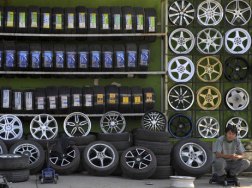 Link: http://www.npr.org/blogs/money/2009/09/podcast_1.html
Summary: Discusses potential for a trade war between the U.S. and China. The U.S imposed a tariff on Chinese tires. China threatened a tariff on chicken paws (feet).
Original Air Date: September 18, 2009
Length 19:03
Main story content begins: 3:50
Discussion of Harmonized trade schedule: 1:23 – 3:50
Discussion Prompt (1): The United States has a Harmonized Tariff Schedule, which outlines all tariffs for the US. Discuss the impacts that you think come from this system of tariffs in the U.S. You might consider impacts on producers, consumers, ease of engaging in trade, and the trade balance.
Follow-up Prompt (1): Consider the complexity in the system of international trade that the harmonized tariff represents. Do you think the U.S. is the only country with this detailed and complex system of tariffs? How do you think this system impacts firms that want to engage in international trade?
Discussion Prompt (2): With the increasing number and complexity of multinational firms that might be headquartered in one country, with research facilities in another, manufacture in one or multiple other countries, and sales all over the world, do you think there is such a thing as domestically produced product (along the line of Made in America) that it would make sense trying to protect?
Written Assignment Prompt: Countries are using the “you pushed me first” scenario, using international trade. Surprisingly, though, tariffs were diminishing with the promotion of free trade, except for just recently. Draft an argument stating your position on free trade or the use of tariffs, and the economic rationale for that position.
 audioecon