Archive for the ‘Production costs’ Category
 Link: http://www.npr.org/blogs/money/2013/01/04/168627298/3-d-printing-is-kind-of-a-big-deal
Summary: Is the future of manufacturing here? What is 3-D printing and how will it be applied in the future. This podcast gives a quick overview on the potential market and technological capacities of 3-D printing.
Original Air Date: January 4, 2013
Length: 5 min
 Link: http://www.npr.org/2012/12/26/168068655/e-books-destroying-traditional-publishing-the-storys-not-that-simple?live=1
Summary: Contrary to conventional wisdom about e-book publishing and its negative impact on book sales, it turns out that flexible pricing on e-books actually bring in new readers.
Original Air Date: December 27, 2012
Length: 4 min
 Link: http://www.npr.org/blogs/money/2013/06/21/194326482/episode-467-tires-taxes-and-the-grizz
Summary: The prices of tires have been rising over the past five years primarily due to a rise in the price of inputs such as rubber. A tariff imposed by the U.S. government on Chinese tire imports has also contributed to the increase of tire prices. Planet Money outlines the negative impacts on U.S. tire companies resulting from the tariff.
Original Air Date: June 21, 2013
Length: 14 min
 Link: http://www.npr.org/blogs/money/2012/05/15/152774525/where-dollar-bills-come-from
Summary: NPR visits Dalton, MA where the dollar bill paper mill is located. The podcast outlines the historical relevance along with the contemporary role of paper money in today’s society.
Original air date: May 15, 2012
Length: 19:03
Link: http://www.npr.org/blogs/money/2012/03/02/147826043/the-friday-podcast-chinas-giant-pool-of-money

Summary: NPR visits China to shed light to the economic trade surplus which the country is experience in relation to the U.S. To understand how 8 percent of the U.S. debt is held by China and how this giant pool of money has been gradually growing, NPR takes a tour around a fake-wood flooring export factory.
Original air date: March 2, 2012
Length: 15:10 min
Link: http://www.npr.org/blogs/money/2011/07/11/137705590/the-friday-podcast-manufacturing-the-song-of-the-summer

Summary: Discussion of the development and production process for Rihanna’s song “Man Down”
Original air date: July 8, 2012
Length: 26:25
Main story content begins: 2:04
Discussion Prompt: This podcast discusses a variety of production costs. Give examples of specific types or categories of production costs that you identify in the podcast. Then pick one of these costs and discuss how a firm (such as a recording studio) might benefit from minimizing or expanding this production cost item.
In your second post later in the week, review the ideas of your peers and comment on their accuracy / expand on their ideas / give additional examples of that type of production cost, or give an example of a type of cost not discussed in posts so far, but which relates to the recording industry.
Follow-up Prompt: Can you take any of the costs you or your peers identified from the podcast and categorize them as: fixed vs. variable costs, as implicit vs. explicit costs, or even marginal costs? Explain your reasoning.
 Link: http://www.npr.org/blogs/money/2012/01/20/145538772/the-friday-podcast-katy-perrys-perfect-year
Summary: An assessment of the record industry (revenue, expenses, profit) using Katy Perry as an example.
Original Air Date: January 20, 2012
Length: 17:34
Main story content begins: 1:50
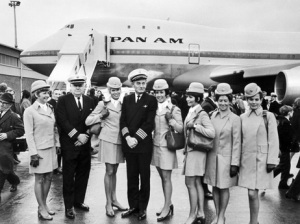
Link: http://www.npr.org/blogs/money/2011/12/09/143466204/the-friday-podcast-the-nasty-rotten-airline-business
Summary: In the context of the 2011 bankruptcy declaration by American Airlines, a discussion of the factors driving bankruptcies in the airline industry.
Original Air Date: December 9, 2011
Length 16:56
Main story content begins: 3:24
 Link: http://www.npr.org/blogs/money/2010/10/08/130436221/the-friday-podcast-buttons-and-other-connectors
Summary: A profile of American manufacturing by visiting two U.S. factories, one struggling to compete in a global economy, and another thriving.
Original Air Date: October 8, 2010
Length 26:35
Main story content begins: 2:22
Discussion Prompt: Consider the two firms discussed in the podcast in the context of different types of market structures (ex. monopolistic competition, perfect competition, oligopoly, monopoly). What type of market structure do you think each firm is operating in? Explain why you think this using the characteristics of each market type and be sure to share your analysis.
Follow-up Prompt: Review your peer’s discussion posts. Try to come to a further developed and agreed upon idea of what type of market structure each firm might be operating. Here are some factors to consider: (1) number of firms – note that how we count the firms depends on how we’re defining the product/market. Note that many companies compete in a global market now, so location is not as important as the substitutability of the products of potential competitor firms. (2) type of product produced: note that in the oligopoly structure firms can be producing products that are identical to one another OR differentiated, that is not as important for oligopoly as is the fact that there are a few firms controlling the market; for monopolistic competition the products are differentiated, but relatively substitutable – so that they can be considered within one market; finally monopolists have a unique product with no close substitutes (substitutes that may exist are not close). (3) barriers to entry / ease of entry: one of the key things to consider here is the presence of patents, which serve as barriers to entry for a period of time. Note that in monopolistic competition there are low/no barriers to entry, with higher barriers in oligopoly and highest in monopoly. With patents we also have to think about whether they are making a product differentiated or making it completely unique.
 audioecon