Archive for the ‘Politics & economics’ Category
 Link: http://www.freakonomics.com/2011/02/18/freakonomics-radio-why-cities-rock/
Summary: Edward Glaeser, professor of Economics at Harvad University and author of the book Triumph of the City: How Our Greatest Invention Makes Us Richer, Smarter, Greener, Healthier, and Happier explains the importance of urban cities and the positive effects they produce for our overall wellbeing.
Original Air Date: February 18, 2011
Length: 17 min
Link: http://www.freakonomics.com/2012/10/25/we-the-sheeple-a-new-freakonomics-podcast/
Summary: Freakonomics radio interviews Bryan Caplan, author of The Myth of the Rational Voter: Why Democracies Choose Bad Policies in order to consider the relationships among the average American voter, their representatives and the democratic system formed in the process.
Original Air Date: October 25, 2012
Length: 23:24 min
 Link: http://www.freakonomics.com/2010/03/24/freakonomics-radio-what-would-the-world-look-like-if-economists-were-in-charge/
Summary: To what extent would the world change if economists ran the world? The podcast interviews Estonian prime minister, Mart Laar, who revamped his economy based on the teachings of Milton Friedman; and Friedman’s grandson, Patri Friedman, who want to build cities in the middle of the ocean.
Original Air Date: March 24, 2010
Length: 20 min
 Link: http://www.npr.org/blogs/money/2012/08/07/158376579/episode-273-when-the-u-s-paid-off-the-entire-national-debt
Summary: NPR outlines the history of the U.S. national debt, from the first decision to create a government debt to the first and only time of paying off the complete debt, to the $16 trillion debt that the U.S. is currently facing.
Original air date: August 07, 2012
Length: 20:03 min
 Link: http://www.npr.org/blogs/money/2012/06/22/155596305/episode-381-why-its-illegal-to-braid-hair-without-a-license
Summary: The podcast outlines the problems that small local businesses face when the state forces licensing restrictions on their practices. Jestina Clayton, a local hair braiding businesswomen in Centerville, Utah shares her experience with the limiting aspects that licensing places on the U.S. economy.
Original air date: June 22, 2012
Length: 12:53 min
 Link: http://www.npr.org/blogs/money/2012/12/18/167265874/episode-424-how-much-is-a-firefighter-worth
Summary: A look at how changing building codes, etc. have changed the risk of fires and so impacted the market for firefighters. Considers challenges in current public policy around fire fighting, including whether policies reflect the current market.
Original air date: December 18, 2012
Length: 19:21
 Link: http://www.npr.org/blogs/money/2012/06/15/155135781/episode-379-does-medicaid-actually-help-people
Summary: NPR interviews Katherine Baicker, a health economist at Harvard University to discuss questions concerning the efficiency of Medicaid in relation to its cost and implementation.
Original air date: June 15, 2012
Length: 14:38 min
 Link: http://www.npr.org/blogs/money/2012/05/15/152774525/where-dollar-bills-come-from
Summary: NPR visits Dalton, MA where the dollar bill paper mill is located. The podcast outlines the historical relevance along with the contemporary role of paper money in today’s society.
Original air date: May 15, 2012
Length: 19:03
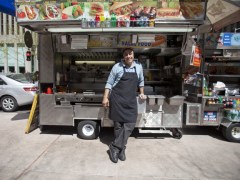 Link: http://www.npr.org/blogs/money/2012/04/25/151365350/how-to-make-it-in-the-food-truck-business
Summary: NPR sheds light on the competitive market economy of the food truck business in Manhattan,.
Original air date: April 27, 2012
Length: 14:24 min
Discussion Prompt: Restaurants are a common example of firms operating in a monopolistically competitive type of market structure. In what way do you think food trucks do or do not fall in that same market structure category? Explain using economic thinking.
Follow-up Prompt: The podcast discusses the particular strategies that food truck drivers might employ to be successful in their goal of maximizing profits. How do you think the type of market structure in which a firm operates impacts the strategic thinking and actions that firms engage in? You can make your comments relevant to the food truck example, or think more broadly and connect to other industries or examples.
Link: http://www.npr.org/blogs/money/2012/04/24/151224338/were-headed-for-a-fiscal-cliff-should-we-jump
Summary: The team outlines the fiscal policies slated to be enacted in January after the presidential election. Simon Johnson, an economist and professor at MIT, explains the harsh realities of the “fiscal cliff” which the year 2013 will bring for the U.S. economy.
Original air date: April 24, 2012
Length: 21:20 min
 audioecon