
Summary: Discussion of why the U.S. government subsidizes crop insurance for farmers.
Original air date: August 14, 2012
Length: 16:17
Summary: Discussion of why the U.S. government subsidizes crop insurance for farmers.
Original air date: August 14, 2012
Length: 16:17
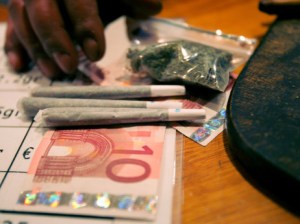
Summary: An assessment of the intentions and current operation of the single European currency through the consideration of the marijuana trade in Maastrict, where the borders of The Netherlands, Belgium and Gemany converge
Original air date: August 17, 2012
Length: 16:09

Summary: Introduction to socialism. Part I of a consideration of political philosophies in the context of U.S. elections.
Original air date: September 17, 2010
Length: 23:45
Main story content begins: 3:27
Note: discussion of inflation, deflation, deflationary spiral, and role of the fed as part of economic indicator 0:00 – 3:26 in context of possible deflation in U.S. economy at the time.

Summary: Introduction to libertarianism. Part II of a consideration of political philosophies in the context of U.S. elections.
Original air date: September 21, 2010
Length: 17:32
Main story content begins: 3:28
Link: http://www.npr.org/blogs/money/2011/06/13/137109349/the-friday-podcast-the-case-for-preschool

Summary: Discussion with economist James Heckman on the findings of a study of the economic and social impacts of preschool.
Original air date: June 10, 2011
Length: 21:14
Main story content begins: 3:12
Discussion Prompt: If you were the U.S. Secretary of Education considering whether to require universal preschoool for all children in the U.S., what factors from the podcast might you consider as you weighed the costs and benefits of this decision? What other factors (not included in the podcast) might you need to consider (or might, say, the President of the U.S. or Congress need to consider). Which of these factors do YOU think would be most important to consider, and why?
Follow-up Prompt: If you were promoted (!) to President, what sort of tradeoffs might you have to think about that are different from those of the Education Secretary? What might you have to take into account from that higher perspective? How can you see – from either position – that budgets reflect scarcity, choices and tradeoffs?
Link: http://www.npr.org/blogs/money/2011/01/26/130917279/the-friday-podcast-cotton-wars

Summary: Presentation of the trade war in the cotton market between Brazil and the U.S. Part of a series of podcasts inspired by Pietra Rivoli’s “Travels of the T-Shirt”
Original air date: October 29, 2010
Length: 31:28
Main story content begins: 1:45
Discussion Prompt: The US is the largest exporter of cotton—thanks to government subsidies—and is in direct competition with Brazil. Discuss how subsidies and protectionist acts by the government impact industries and consumers in the United States and in Brazil, and whether you agree with these policies by the U.S.
Written Assignment Prompt: In the podcast, Pedro describes the US as breaking the ‘rules’—which refers to a WTO agreement that Brazil, the US, and many other countries signed. Brazil fights back and wins! Sort of. Imagine you are a member of the WTO ruling on decisions such as these. Considering the outcome and impacts of this case in particular: how much power do you have over making rulings and forcing countries to follow them? Is there a way to make the US and others in violation of WTO rules comply?
 Original air date: April 12, 2011
Length: 21:43
Main story content begins: 3:10
Link: http://www.npr.org/blogs/money/2012/07/18/156928675/episode-387-the-no-brainer-economic-platform

Summary: Presentation of a hypothetical presidential campaign platform that economist from across the political spectrum would support.
Original air date: July 18, 2012
Length: 26:54
Discussion Prompt: One economic platform in the podcast is that the government should cut corporate, income and payroll taxes. How this might impact the economic environment of the country? Why were some panelists in the podcast opposed to cutting these taxes?
Written Assignment Prompt: Consider these economic platforms from a political point of view. What are the strengths and weaknesses of each? If you were a political strategist, could you present these ideas in a way that the public would understand?

Summary: A discussion of how the choice of discount rate impacts public policy decisions such as flood protection actions in Los Angeles and New Orleans.
Original Air Date: July 20, 2012
Length 17:38
 Link: http://www.npr.org/blogs/money/2012/05/04/152028558/in-a-leaderless-world-who-wins
Summary: Interview with Ian Bremmer discussing his book, Every Nation for Itself: Winners and Losers in a G-Zero World and issues of international politics and economics in a multipolar (or zero-polar) world.
Original Air Date: May 4, 2012
Length: 15:23
Main story content begins: 2:37
 audioecon