Archive for the ‘International trade’ Category
 Link: http://www.npr.org/blogs/money/2011/12/23/144195081/the-friday-podcast-why-economists-hate-gifts
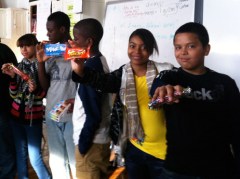
Summary: An economic consideration of the holiday season with economist Joel Waldfogel. Includes an experiment distributing candy randomly to students and allowing a candy exchange.
Original Air Date: December 23, 2011
Length 17:15
Main story content begins: 2:52
 Link: http://www.npr.org/blogs/money/2011/11/04/142016962/the-friday-podcast-how-fear-turned-a-surplus-into-scarcity
Summary: Story of the origins of the 2008 global rice shortage “that wasn’t”.
Original Air Date: November 4, 2011
Length: 24:33
Main story content begins: 2:12
 Link: http://www.npr.org/blogs/money/2010/10/08/130436221/the-friday-podcast-buttons-and-other-connectors
Summary: A profile of American manufacturing by visiting two U.S. factories, one struggling to compete in a global economy, and another thriving.
Original Air Date: October 8, 2010
Length 26:35
Main story content begins: 2:22
Discussion Prompt: Consider the two firms discussed in the podcast in the context of different types of market structures (ex. monopolistic competition, perfect competition, oligopoly, monopoly). What type of market structure do you think each firm is operating in? Explain why you think this using the characteristics of each market type and be sure to share your analysis.
Follow-up Prompt: Review your peer’s discussion posts. Try to come to a further developed and agreed upon idea of what type of market structure each firm might be operating. Here are some factors to consider: (1) number of firms – note that how we count the firms depends on how we’re defining the product/market. Note that many companies compete in a global market now, so location is not as important as the substitutability of the products of potential competitor firms. (2) type of product produced: note that in the oligopoly structure firms can be producing products that are identical to one another OR differentiated, that is not as important for oligopoly as is the fact that there are a few firms controlling the market; for monopolistic competition the products are differentiated, but relatively substitutable – so that they can be considered within one market; finally monopolists have a unique product with no close substitutes (substitutes that may exist are not close). (3) barriers to entry / ease of entry: one of the key things to consider here is the presence of patents, which serve as barriers to entry for a period of time. Note that in monopolistic competition there are low/no barriers to entry, with higher barriers in oligopoly and highest in monopoly. With patents we also have to think about whether they are making a product differentiated or making it completely unique.
 Link: http://www.npr.org/blogs/money/2010/06/04/127480338/the-friday-podcast-india-s-economy-is-booming-but-not-for-everybody
Summary: Considers questions about economic disparity in benefits from economic growth by talking with a cobbler who lives on the streets and economic policy makers in India.
Original air date: June 4, 2010
Length 23:56
Main story content begins: 2:27
 Link: http://www.npr.org/blogs/money/2011/02/25/134059518/the-friday-podcast-the-difference-between-egypt-and-libya
Summary: Discussion of how differing political economy structures in Egypt and Libya impacted the political transitions in each state. Includes a discussion of the resource curse problem of resource-rich developing countries.
Original air date: February 25, 2011
Length 20:03
Main story content begins: 2:05
 Link: http://www.npr.org/blogs/money/2010/05/_after_the_downgrade_ap.html
Summary: Discussion of the rating agency process of providing country bond ratings, within the context of the Euro crisis.
Length 21:08
Original air date: May 7, 2010
Main story content begins: 8:00
Planet Money indicator discussion of NY Stock Exchange “circuit breaker’ and its backfire on May 6, 2010) 1:10 – 8:00
 Link: http://www.npr.org/blogs/money/2009/09/podcast_1.html
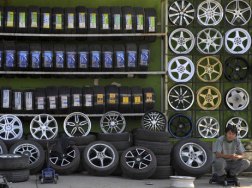
Summary: Discusses potential for a trade war between the U.S. and China. The U.S imposed a tariff on Chinese tires. China threatened a tariff on chicken paws (feet).
Original Air Date: September 18, 2009
Length 19:03
Main story content begins: 3:50
Discussion of Harmonized trade schedule: 1:23 – 3:50
Discussion Prompt (1): The United States has a Harmonized Tariff Schedule, which outlines all tariffs for the US. Discuss the impacts that you think come from this system of tariffs in the U.S. You might consider impacts on producers, consumers, ease of engaging in trade, and the trade balance.
Follow-up Prompt (1): Consider the complexity in the system of international trade that the harmonized tariff represents. Do you think the U.S. is the only country with this detailed and complex system of tariffs? How do you think this system impacts firms that want to engage in international trade?
Discussion Prompt (2): With the increasing number and complexity of multinational firms that might be headquartered in one country, with research facilities in another, manufacture in one or multiple other countries, and sales all over the world, do you think there is such a thing as domestically produced product (along the line of Made in America) that it would make sense trying to protect?
Written Assignment Prompt: Countries are using the “you pushed me first” scenario, using international trade. Surprisingly, though, tariffs were diminishing with the promotion of free trade, except for just recently. Draft an argument stating your position on free trade or the use of tariffs, and the economic rationale for that position.
 audioecon