Archive for the ‘International trade’ Category
 Link: http://www.marketplace.org/topics/sustainability/boom-and-bust-story-crop-called-guar
Summary: Guar is a small bean, and it had a recent rise and fall in the marketplace. Besides being an additive to thicken many foods, it’s also used in fracking. When fracking took off, the price of guar rose. As the price increased, Texas farmers started growing a lot of it, until Pakistan and India–which grow 98% of the guar combined–caught up to the demand. As a result, oil companies stopped hoarding it, and the prices dropped. The Texas farmers were left without buyers, and caused a chain reaction of bankruptcy.
Original Air Date: October 9, 2014
Length: 2 minutes 47 seconds
 Link: http://www.marketplace.org/topics/sustainability/what-could-slow-uss-surging-oil-output-low-prices
Summary: The oil the United States has been pumping has been getting less and less profitable. In North America, oil comes from fracking shale, and after the first initial output, oil companies have to drill deeper and deeper to get to the oil, causing it to be more expensive to access. However, the price of oil is dropping worldwide, and that could mean that the United States could be out of the oil industry, simply because it costs too much to produce.
Original Air Date: October 10, 2014
Length: 2 minutes
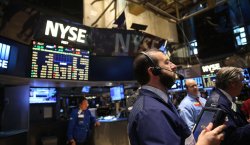 Link: http://www.marketplace.org/topics/economy/stock-market-has-been-and-always-will-be-volatile
Summary: Many people are worried about the stock markets, especially with everything going on in the world (Germany’s bad news, Ebola, etc). However, the stock market is a volatile place–and, according to Quincy Crosby, a financial market strategist at Prudential Financial, it’s meant to be that way.
Original Air Date: October 10, 2014
Length: 2 minutes 11 seconds
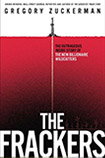 Link: http://www.econtalk.org/archives/2014/06/gregory_zuckerm.html
Summary: Russ Roberts, host of Econtalk, interviews Gregory Zuckerman, author of The Frackers: The Outrageous Inside Story of the New Billionaire Wildcatters about the rise of the hydraulic fracturing, its developmental stages and the eventual energy revolution.
Original Air Date: June 26, 2014
Length: 61 min
 Link: http://www.npr.org/blogs/money/2014/04/18/304540007/episode-533-why-cars-from-europe-and-the-us-just-can-t-get-along
Summary: An exploration of how different safety standards across countries impact the automobile industry. Discusses differences in regulations from turn signals to windshield wipers, and how that impacts production choices and costs in the industry.
Original air date: April 18, 2014
Length: 17 min
Discussion Prompt: Reflecting on what you’ve learned about international trade, production costs & the content of this podcast, discuss what impacts the differential regulations on cars in the U.S. and Europe have on (a) production decisions for the firm, and (b) international trade.
Follow-up Prompt: Using economic thinking, consider the tradeoffs between security and cost in this podcast. The governments/regulators in these countries might say it is worth it for consumers to pay more to get more security. What do you think?
Follow-up Prompt: Considering production costs in the context of firms’ desire to maximize profits, what strategies might firms employ to maximize profits under these conditions of different regulations across countries?
 Link: http://www.npr.org/blogs/money/2014/03/07/286900628/episode-523-the-fight-over-ukraines-gas-bill
Summary: The Planet Money team look at the role that Ukraine’s gas subsidies played in the 2013/2014 crisis in the country. Includes discussion of the roots of the energy interdependence of Russia and Ukraine, gas subsidies, the creation of markets as communist systems were abandoned, and the choices Ukraine faced between Europe and Russia as partners to help it out of economic crisis.
Original air date: March 7, 2014
Length: 14 min
 Link: http://www.npr.org/blogs/money/2013/12/13/250747279/episode-503-adding-up-the-cost-of-the-planet-money-t-shirt
Summary: A detailed review of the costs that went into producing the Planet Money t-shirt.
Original Air Date: December 13, 2013
Length: 21 min
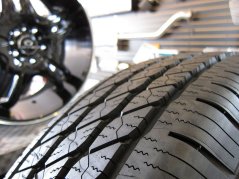 Link: http://www.npr.org/blogs/money/2013/06/21/194326482/episode-467-tires-taxes-and-the-grizz
Summary: The prices of tires have been rising over the past five years primarily due to a rise in the price of inputs such as rubber. A tariff imposed by the U.S. government on Chinese tire imports has also contributed to the increase of tire prices. Planet Money outlines the negative impacts on U.S. tire companies resulting from the tariff.
Original Air Date: June 21, 2013
Length: 14 min
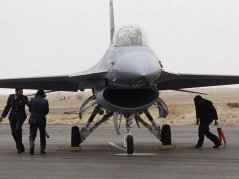 Link: http://www.npr.org/blogs/money/2013/08/23/214928040/episode-482-why-the-u-s-keeps-sending-weapons-to-egypt
Summary: A discussion of the economic and business factors within the U.S. that complicate the question of whether the U.S. should be sending aid in the form of weapons to Egypt during its ongoing political crisis.
Length: 13:08 min
Original air date: August 23, 2013
 Link: http://www.npr.org/blogs/money/2013/07/23/204851751/episode-474-the-north-korea-files
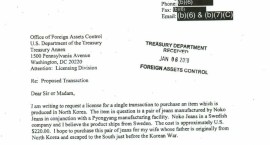
Summary: Report on an investigation into U.S. citizens who seek to engage in trade with North Korea. Examples include companies seeking to trade for profit and to market new goods, individuals wanting kitsch goods, and religious organizations seeking a point of entry to the country. Includes discussions on sanctions and the political considerations of each government as they consider these appeals to engage in trade.
Length: 23:21 min
Original air date: July 23, 2013
Discussion Prompt (1): This podcast discusses a situation in which trade is (largely) prohibited. What are some of the reasons for people or nations engaging in trade that are discussed in the podcast?
Follow-up Prompt (1): Can anyone suggest additional reasons that trade might take place (in addition to those discussed in the podcast)? Think more generally about nations engaging in trade beyond the particular case of N. Korea and the rarity of those goods.
Discussion Prompt (2): Recognizing that N. Korea is an extreme example, what do you see as the pluses and minuses of a country having a more centrally planned or command type economic structure? Be sure to make comparisons to other types of economic systems.
Follow-up Prompt (2): Thinking about the role of government in a centrally planned economy, how do you think the role of incentives is different in a centrally planned economy than in a market economy? Give specific examples.
 audioecon