Archive for the ‘International economics’ Category
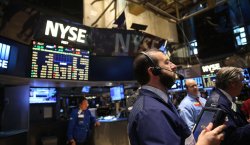 Link: http://www.marketplace.org/topics/economy/stock-market-has-been-and-always-will-be-volatile
Summary: Many people are worried about the stock markets, especially with everything going on in the world (Germany’s bad news, Ebola, etc). However, the stock market is a volatile place–and, according to Quincy Crosby, a financial market strategist at Prudential Financial, it’s meant to be that way.
Original Air Date: October 10, 2014
Length: 2 minutes 11 seconds
 Link: http://www.npr.org/blogs/money/2014/03/07/286900628/episode-523-the-fight-over-ukraines-gas-bill
Summary: The Planet Money team look at the role that Ukraine’s gas subsidies played in the 2013/2014 crisis in the country. Includes discussion of the roots of the energy interdependence of Russia and Ukraine, gas subsidies, the creation of markets as communist systems were abandoned, and the choices Ukraine faced between Europe and Russia as partners to help it out of economic crisis.
Original air date: March 7, 2014
Length: 14 min
 Link: http://www.npr.org/blogs/money/2014/01/22/265014932/episode-511-rule-breakers
Summary: Planet Money presents three stories that revolve around the theme of ‘Rule Breaking.’ This three episode mash-up considers how people in Indonesia navigate horrendous traffic, how the U.S. illegally subsidizes cotton farmers and how banks decide to accumulate huge risks.
Original Air Date: January 22, 2014
Length: 16 min
 Link: http://www.npr.org/blogs/money/2013/12/31/258687278/a-bet-five-metals-and-the-future-of-the-planet
Summary: A bet between a biologist and an economist over population growth. This Planet Money Podcast reports on a wager between biologist Paul Ehrlich and economist Julian Simon on the affect of population boom to our environment.
Original Air Date: January 2, 2014
Length: 7 minutes
 Link: http://www.npr.org/blogs/money/2013/12/13/250747279/episode-503-adding-up-the-cost-of-the-planet-money-t-shirt
Summary: A detailed review of the costs that went into producing the Planet Money t-shirt.
Original Air Date: December 13, 2013
Length: 21 min
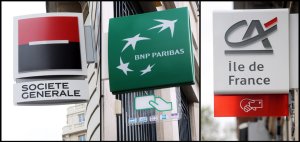 Link: http://www.npr.org/blogs/money/2011/09/16/140464797/a-slow-motion-bank-run-in-europe
Summary: What are the potential risks and negative spillovers of “big banks” failing? This podcast outlines why big banks, for example big French banks cannot default because of the havoc that would befall in an economy.
Original Air Date: September 14, 2011
Length: 3 min
 Link: http://www.npr.org/blogs/money/2013/10/10/230914894/what-a-u-s-default-would-mean-for-pensions-china-and-social-security
Summary: What would happen if the U.S. defaults? According to experts in the field, a U.S. default would lead to the inability for the government to pay back their loans which in turn could have damaging effects to the social security program, pension accounts and foreign direct investment in treasury bonds. Also considers the impact on China, as a U.S. bondholder.
Original Air Date: October 10, 2013
Length: 4 min
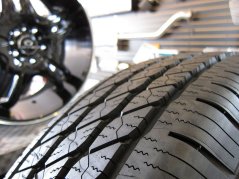 Link: http://www.npr.org/blogs/money/2013/06/21/194326482/episode-467-tires-taxes-and-the-grizz
Summary: The prices of tires have been rising over the past five years primarily due to a rise in the price of inputs such as rubber. A tariff imposed by the U.S. government on Chinese tire imports has also contributed to the increase of tire prices. Planet Money outlines the negative impacts on U.S. tire companies resulting from the tariff.
Original Air Date: June 21, 2013
Length: 14 min
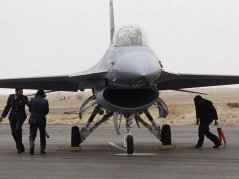 Link: http://www.npr.org/blogs/money/2013/08/23/214928040/episode-482-why-the-u-s-keeps-sending-weapons-to-egypt
Summary: A discussion of the economic and business factors within the U.S. that complicate the question of whether the U.S. should be sending aid in the form of weapons to Egypt during its ongoing political crisis.
Length: 13:08 min
Original air date: August 23, 2013
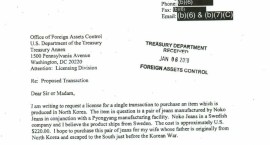 Link: http://www.npr.org/blogs/money/2013/07/23/204851751/episode-474-the-north-korea-files
Summary: Report on an investigation into U.S. citizens who seek to engage in trade with North Korea. Examples include companies seeking to trade for profit and to market new goods, individuals wanting kitsch goods, and religious organizations seeking a point of entry to the country. Includes discussions on sanctions and the political considerations of each government as they consider these appeals to engage in trade.
Length: 23:21 min
Original air date: July 23, 2013
Discussion Prompt (1): This podcast discusses a situation in which trade is (largely) prohibited. What are some of the reasons for people or nations engaging in trade that are discussed in the podcast?
Follow-up Prompt (1): Can anyone suggest additional reasons that trade might take place (in addition to those discussed in the podcast)? Think more generally about nations engaging in trade beyond the particular case of N. Korea and the rarity of those goods.
Discussion Prompt (2): Recognizing that N. Korea is an extreme example, what do you see as the pluses and minuses of a country having a more centrally planned or command type economic structure? Be sure to make comparisons to other types of economic systems.
Follow-up Prompt (2): Thinking about the role of government in a centrally planned economy, how do you think the role of incentives is different in a centrally planned economy than in a market economy? Give specific examples.
 audioecon