Archive for the ‘China’ Category
 Link: http://www.npr.org/sections/money/2015/09/09/438948679/episode-649-china-china-china
Summary: In this podcast, the Planet Money team attempt to decipher why economic news about China is so popular in the media and if the indicators are something we should worry about including the stock market and economic growth.
Original Air Date: September 9, 2015
Length: 17 minutes 9 seconds
 Link: http://www.npr.org/blogs/money/2015/04/10/398811199/episode-616-how-solar-got-cheap
Summary: Solar power is becoming increasingly popular. The main reason is not due to environmental awareness but because of a market glut and a need to clear inventory.
Original Air Date: April 10, 2015
Length: 16 minutes
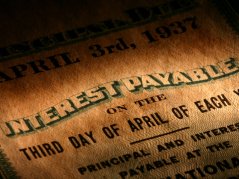 Link: http://www.npr.org/blogs/money/2013/10/10/230914894/what-a-u-s-default-would-mean-for-pensions-china-and-social-security
Summary: What would happen if the U.S. defaults? According to experts in the field, a U.S. default would lead to the inability for the government to pay back their loans which in turn could have damaging effects to the social security program, pension accounts and foreign direct investment in treasury bonds. Also considers the impact on China, as a U.S. bondholder.
Original Air Date: October 10, 2013
Length: 4 min
Link: http://www.npr.org/blogs/money/2012/03/02/147826043/the-friday-podcast-chinas-giant-pool-of-money

Summary: NPR visits China to shed light to the economic trade surplus which the country is experience in relation to the U.S. To understand how 8 percent of the U.S. debt is held by China and how this giant pool of money has been gradually growing, NPR takes a tour around a fake-wood flooring export factory.
Original air date: March 2, 2012
Length: 15:10 min
Link: http://www.npr.org/blogs/money/2012/09/25/161749564/episode-405-cheating-stealing-and-quantitative-easing

Summary: The podcast outlines the black market of stolen bikes, cheating between countries (USA and China) in trade agreements and the changes of quantitative easing announcements between past and current years.
Original air date: September 25, 2012
Length: 14:21 min
Link: http://www.npr.org/blogs/money/2009/09/podcast_economics_for_medieval.html

Summary: Discussion of the economics of life in pre-industrial China in the lower Yangtze River Valley. Also compares the experiences of living in China vs. in Europe in the middle ages.
Original air date: September 4, 2009
Length: 17:00
Main content story begins: 1:18
 Link: http://www.npr.org/blogs/money/2010/05/_after_the_downgrade_ap.html
Summary: Discussion of the rating agency process of providing country bond ratings, within the context of the Euro crisis.
Length 21:08
Original air date: May 7, 2010
Main story content begins: 8:00
Planet Money indicator discussion of NY Stock Exchange “circuit breaker’ and its backfire on May 6, 2010) 1:10 – 8:00
 Link: http://www.npr.org/blogs/money/2010/03/podcast_why_chinas_central_ban.html
Summary: Discussion of the debate whether China manipulates is currency to impact exchange rate with U.S.
Original Air Date: March 19, 2010
Length 21:44
Main story content begins: 3:24
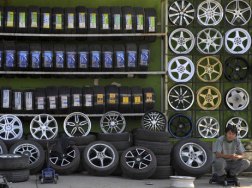 Link: http://www.npr.org/blogs/money/2009/09/podcast_1.html
Summary: Discusses potential for a trade war between the U.S. and China. The U.S imposed a tariff on Chinese tires. China threatened a tariff on chicken paws (feet).
Original Air Date: September 18, 2009
Length 19:03
Main story content begins: 3:50
Discussion of Harmonized trade schedule: 1:23 – 3:50
Discussion Prompt (1): The United States has a Harmonized Tariff Schedule, which outlines all tariffs for the US. Discuss the impacts that you think come from this system of tariffs in the U.S. You might consider impacts on producers, consumers, ease of engaging in trade, and the trade balance.
Follow-up Prompt (1): Consider the complexity in the system of international trade that the harmonized tariff represents. Do you think the U.S. is the only country with this detailed and complex system of tariffs? How do you think this system impacts firms that want to engage in international trade?
Discussion Prompt (2): With the increasing number and complexity of multinational firms that might be headquartered in one country, with research facilities in another, manufacture in one or multiple other countries, and sales all over the world, do you think there is such a thing as domestically produced product (along the line of Made in America) that it would make sense trying to protect?
Written Assignment Prompt: Countries are using the “you pushed me first” scenario, using international trade. Surprisingly, though, tariffs were diminishing with the promotion of free trade, except for just recently. Draft an argument stating your position on free trade or the use of tariffs, and the economic rationale for that position.
 audioecon