Archive for the ‘Environmental economics’ Category
 Link: http://www.marketplace.org/topics/sustainability/boom-and-bust-story-crop-called-guar
Summary: Guar is a small bean, and it had a recent rise and fall in the marketplace. Besides being an additive to thicken many foods, it’s also used in fracking. When fracking took off, the price of guar rose. As the price increased, Texas farmers started growing a lot of it, until Pakistan and India–which grow 98% of the guar combined–caught up to the demand. As a result, oil companies stopped hoarding it, and the prices dropped. The Texas farmers were left without buyers, and caused a chain reaction of bankruptcy.
Original Air Date: October 9, 2014
Length: 2 minutes 47 seconds
 Link: http://www.marketplace.org/topics/sustainability/what-could-slow-uss-surging-oil-output-low-prices
Summary: The oil the United States has been pumping has been getting less and less profitable. In North America, oil comes from fracking shale, and after the first initial output, oil companies have to drill deeper and deeper to get to the oil, causing it to be more expensive to access. However, the price of oil is dropping worldwide, and that could mean that the United States could be out of the oil industry, simply because it costs too much to produce.
Original Air Date: October 10, 2014
Length: 2 minutes
Link: http://www.econtalk.org/archives/2014/08/terry_anderson.html
Summary:Terry Anderson, distinguished Fellow at the Property and Environment Research Center (PERC) and Senior Fellow at the Hoover Institute talks about free-market environmentalism and property rights that can protect natural resources. One of the main points of his book Free Market Environmentalism which is currently being revised for its third addition, revolves around the idea of what makes market successful and how can the success of the free market model be applied to the protection of the environment.
Original Air Date: August 18, 2014
Length: 63 min
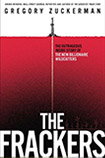 Link: http://www.econtalk.org/archives/2014/06/gregory_zuckerm.html
Summary: Russ Roberts, host of Econtalk, interviews Gregory Zuckerman, author of The Frackers: The Outrageous Inside Story of the New Billionaire Wildcatters about the rise of the hydraulic fracturing, its developmental stages and the eventual energy revolution.
Original Air Date: June 26, 2014
Length: 61 min
 Link: http://www.npr.org/blogs/money/2014/01/22/265014932/episode-511-rule-breakers
Summary: Planet Money presents three stories that revolve around the theme of ‘Rule Breaking.’ This three episode mash-up considers how people in Indonesia navigate horrendous traffic, how the U.S. illegally subsidizes cotton farmers and how banks decide to accumulate huge risks.
Original Air Date: January 22, 2014
Length: 16 min
 Link: http://www.npr.org/blogs/money/2013/12/31/258687278/a-bet-five-metals-and-the-future-of-the-planet
Summary: A bet between a biologist and an economist over population growth. This Planet Money Podcast reports on a wager between biologist Paul Ehrlich and economist Julian Simon on the affect of population boom to our environment.
Original Air Date: January 2, 2014
Length: 7 minutes
 Link: http://freakonomics.com/2013/10/24/why-bad-environmentalism-is-such-an-easy-sell-a-new-freakonomics-radio-podcast-2/
Summary: Ed Glaeser, University of Harvard professor sheds light on why it is easy for politicians and marketers to sell green.
Original Air Date: October 24, 2013
Length: 25 min
 Link: http://www.npr.org/blogs/money/2013/07/12/201502003/episode-472-the-one-page-plan-to-fix-global-warming
Summary: Economist, Henry Jacoby, explains how an economist might introduce a carbon tax in the United States to address climate change. Includes a discussion of the conflicts of economics vs. politics.
Length: 19:51 min
Original air date: July 12, 2013
 Link: http://www.freakonomics.com/2011/01/13/freakonomics-radio-the-economics-of-trash/
Summary: Freakonomics radio sheds a bit of light on the insidious characteristics of the “economics of trash” and asks how incentives effect the level of trash produced by the average household.
Original Air Date: January, 12 2011
Length: 22 min
Link: http://www.econtalk.org/archives/2011/08/satz_on_markets.html

Summary: Debra Satz, Professor of Philosophy at Stanford University, argues about the vagueness of efficiency in markets and the resulting impact on the economic, social and political spheres of society.
Original air date: August 8, 2011
Length: 1:02
 audioecon