Archive for the ‘Economic Growth & Development’ Category
 Link: http://www.npr.org/blogs/money/2012/09/04/160555540/episode-279-the-failure-tour-of-new-york
Summary: Economist Tim Harford, senior columnist for the Financial Times, argues that failure is necessary for success and that economic growth is a product of learning from mistakes.
Original air date: September 04, 2012
Length: 14:22 min
 Link: http://www.npr.org/blogs/money/2012/08/07/158376579/episode-273-when-the-u-s-paid-off-the-entire-national-debt
Summary: NPR outlines the history of the U.S. national debt, from the first decision to create a government debt to the first and only time of paying off the complete debt, to the $16 trillion debt that the U.S. is currently facing.
Original air date: August 07, 2012
Length: 20:03 min
Link: http://www.npr.org/blogs/money/2012/04/24/151224338/were-headed-for-a-fiscal-cliff-should-we-jump

Summary: The team outlines the fiscal policies slated to be enacted in January after the presidential election. Simon Johnson, an economist and professor at MIT, explains the harsh realities of the “fiscal cliff” which the year 2013 will bring for the U.S. economy.
Original air date: April 24, 2012
Length: 21:20 min
Link: http://www.npr.org/blogs/money/2012/03/02/147826043/the-friday-podcast-chinas-giant-pool-of-money

Summary: NPR visits China to shed light to the economic trade surplus which the country is experience in relation to the U.S. To understand how 8 percent of the U.S. debt is held by China and how this giant pool of money has been gradually growing, NPR takes a tour around a fake-wood flooring export factory.
Original air date: March 2, 2012
Length: 15:10 min
Link: http://www.econtalk.org/archives/2012/06/moretti_on_jobs.html

Summary: Enrico Moretti, author of The New Geography of Jobs explains how economic success has spillover effects from educated workers in forms of wages and jobs.
Original air date: June 25, 2012
Length: 1:11
Link: http://www.econtalk.org/archives/_featuring/dani_rodrik/

Summary: Dani Rodrik of Harvard University discusses how globalization factors do not necessarily produce negative implications. He argues that work displacement due to technological advancements and productivity increase can be managed by different political and social policies varying from country to country.
Original air date: April 11, 2011
Length: 1:00
Link: http://www.econtalk.org/archives/2009/05/leamer_on_macro.html
Summary: Ed Leamer, author of Macroeconomic Patterns and Stories discusses how the study of economics should not be treated as an empirical science but rather as a way of thinking. Leamer also emphasizes that patterns of macroeconomic policies and data should be used in order to further our understanding of the economy.
Original air date: May 4, 2009
Length: 1:06
Link: http://www.econtalk.org/archives/2012/08/ober_on_the_anc.html
Summary: Josiah Ober argues that ancient Greece, especially dominant provinces, such as Athens, were quite successful in sustaining economic growth via utilization of open political processes and economic policies that encouraged human capital investments or innovation.
Original air date: August 6, 2012
Length: 1:06
Link: http://www.npr.org/blogs/money/2010/10/12/130512149/the-tuesday-podcast-would-you-rather-be-middle-class-now-or-rich-in-1900

Summary: Discussion with Economist Tim Taylor on the puzzler question he poses on the first day of Econ 101: Would you rather make $70,000 a year in 1900, or $70,000 today?
Original air date: October 12, 2010
Length: 19:32
Main story content begins: 4:10
 Link: http://www.npr.org/blogs/money/2011/10/25/141701559/the-tuesday-podcast-will-economic-growth-destroy-the-planet
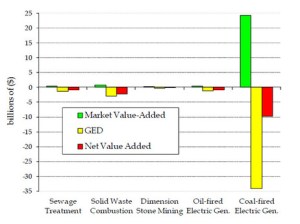
Summary: A discussion of the question whether the environment can sustain continuous economic growth, and the impact of economic growth on the environment.
Original Air Date: October 25, 2011
Length: 21:51
Main story content begins: 3:22

 audioecon