Author Archive
Link: http://www.freakonomics.com/2012/07/30/freakonomics-goes-to-college-part-1-a-new-freakonomics-radio-podcast/

Summary: Freakonomics Goes to College features a dual commentary on the benefits and costs of college degrees. Part 1 of the podcast focuses on the shadow economy of fake diplomas as well as how prosperous a college degree is for an individual in the long run.
Original air date: July 30, 2012
Length: 29:58 min
Link: http://www.econtalk.org/archives/2012/06/moretti_on_jobs.html

Summary: Enrico Moretti, author of The New Geography of Jobs explains how economic success has spillover effects from educated workers in forms of wages and jobs.
Original air date: June 25, 2012
Length: 1:11
Link: http://www.econtalk.org/archives/_featuring/dani_rodrik/

Summary: Dani Rodrik of Harvard University discusses how globalization factors do not necessarily produce negative implications. He argues that work displacement due to technological advancements and productivity increase can be managed by different political and social policies varying from country to country.
Original air date: April 11, 2011
Length: 1:00
Link: http://www.econtalk.org/archives/2009/05/leamer_on_macro.html
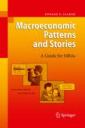
Summary: Ed Leamer, author of Macroeconomic Patterns and Stories discusses how the study of economics should not be treated as an empirical science but rather as a way of thinking. Leamer also emphasizes that patterns of macroeconomic policies and data should be used in order to further our understanding of the economy.
Original air date: May 4, 2009
Length: 1:06
Link: http://www.freakonomics.com/2012/01/04/why-is-“i-don’t-know”-so-hard-to-say-a-new-freakonomics-radio-podcast/

Summary: The podcast is separated in question based segments in which Stephen D. Levitt expresses his personal opinion on different topics such as business, political vs economic theory and the aspects of earning an economic degree.
Original air date: January 4, 2012
Length: 16 min
Link: http://www.econtalk.org/archives/2010/07/gregory_on_poli.html
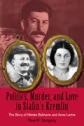
Summary: Historical background on the power struggle between Stalin and Bukharin. A summary of Paul Gregory’s book Politics, Murder, and Love in Stalins Kremlin analyzing the clear relation between violence and non-market allocation.
Original air date: July 12, 2010
Length: 1:02
Link: http://www.econtalk.org/archives/2012/08/ober_on_the_anc.html
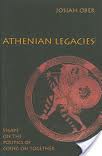
Summary: Josiah Ober argues that ancient Greece, especially dominant provinces, such as Athens, were quite successful in sustaining economic growth via utilization of open political processes and economic policies that encouraged human capital investments or innovation.
Original air date: August 6, 2012
Length: 1:06
Link: http://www.econtalk.org/archives/2011/11/baumeister_on_g.html
 Summary: Roy Baumeister, a Florida State psychology professor, argues that there is no superiority level between men and woman. Rather, the genders excel at specific areas due to certain trade offs which they decided to take throughout their lives.
Original air date: November 14, 2011
Length: 1:16
Link: http://www.econtalk.org/archives/2012/03/derman_on_theor.html
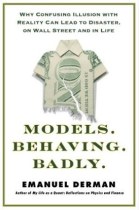
Summary: Emmanuel Derman, a former physicist and Goldman Sachs quantitative analyst, criticizes attempts made to apply scientific formulas in an effort to elucidate financial circumstances or events.
Original air date: March 12, 2012
Length: 59 min
Link: http://www.econtalk.org/archives/2011/08/satz_on_markets.html

Summary: Debra Satz, Professor of Philosophy at Stanford University, argues about the vagueness of efficiency in markets and the resulting impact on the economic, social and political spheres of society.
Original air date: August 8, 2011
Length: 1:02


 audioecon